
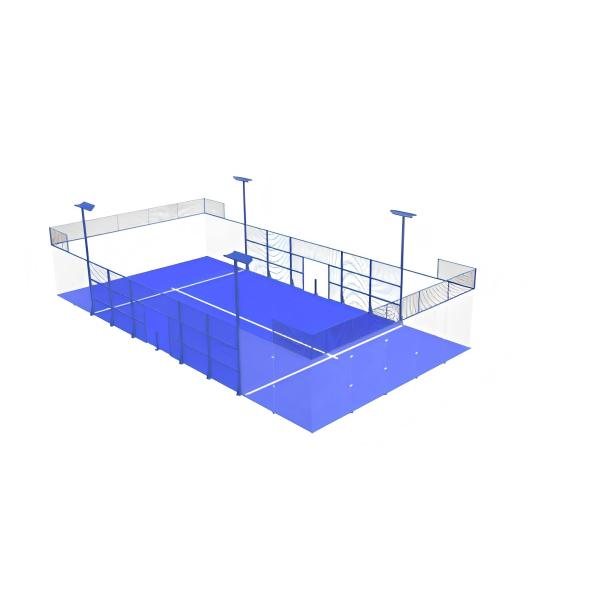
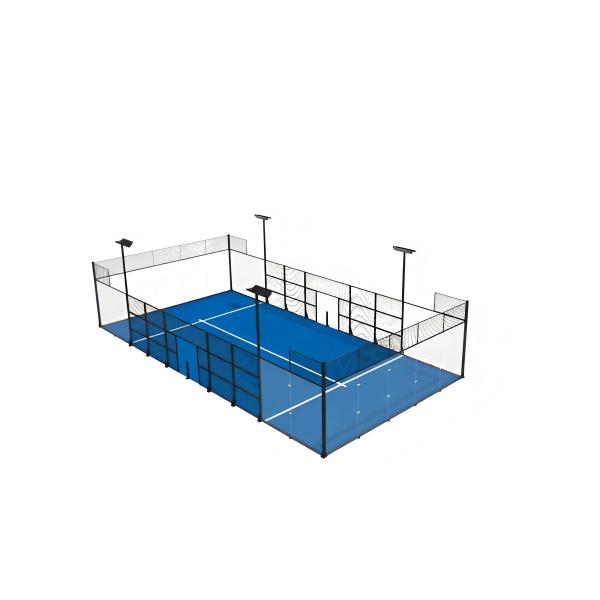
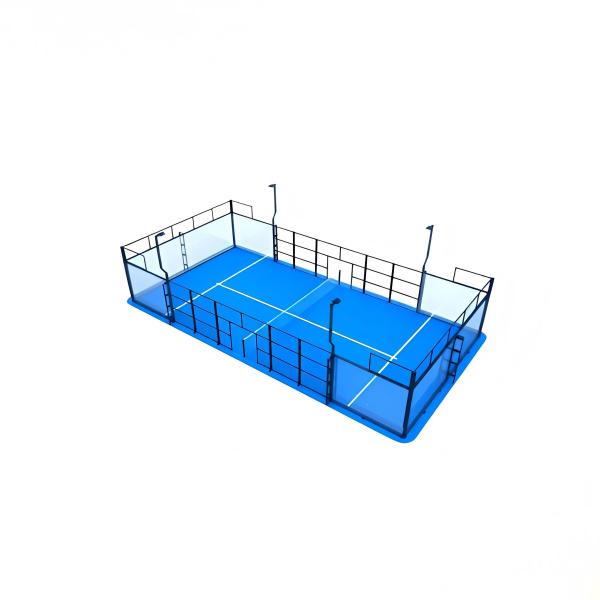
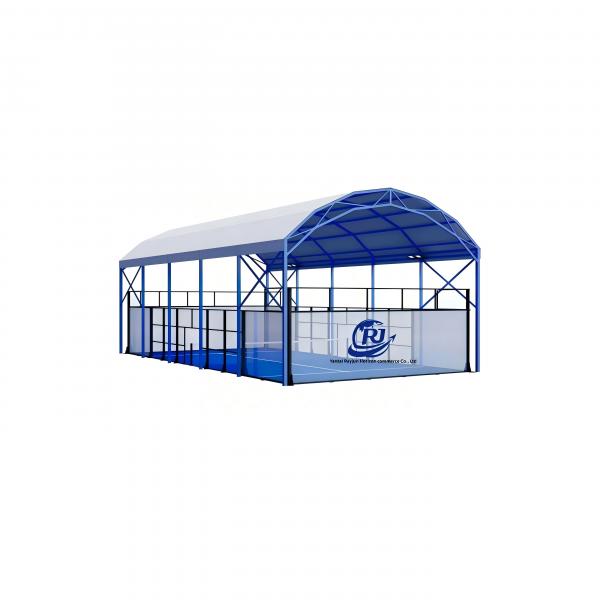
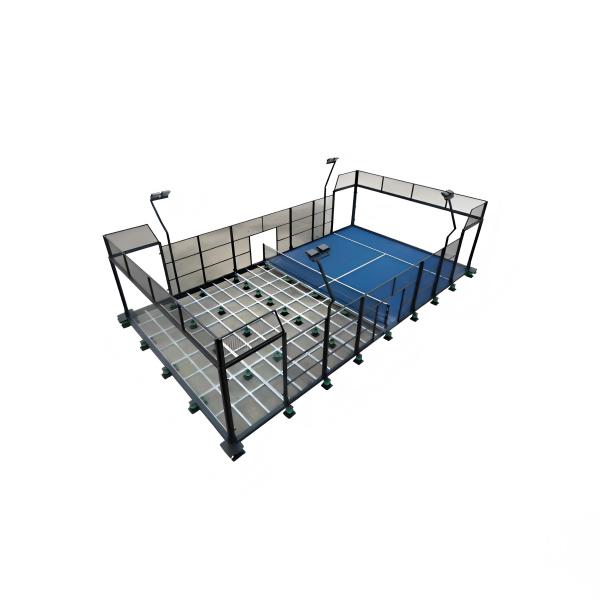
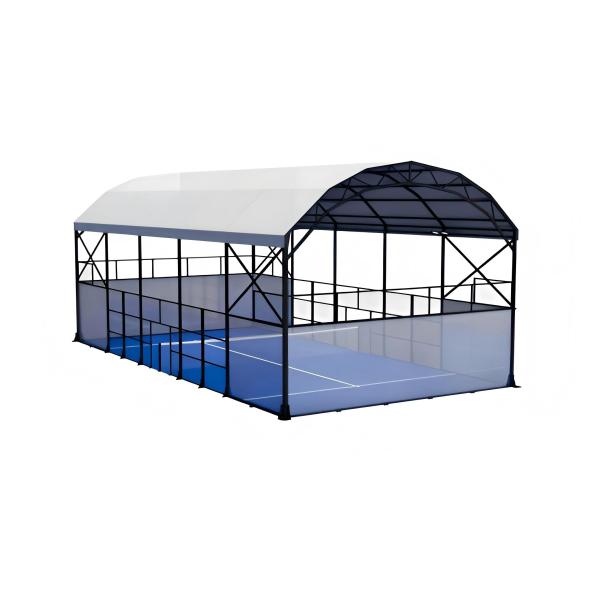
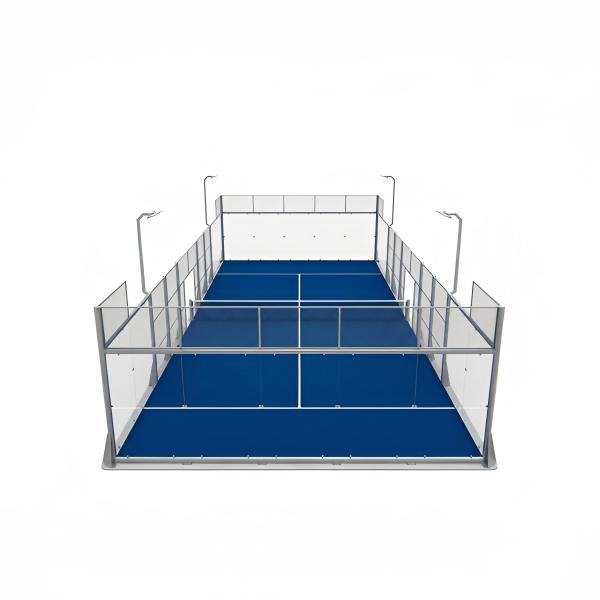
The wind and snow rating you need for a padel court depends entirely on where you install it: a court in a sheltered inland club normally performs safely at a 90–100 km/h design wind speed, while the same structure on a coastal, rooftop, or open-field site should be specified for 120–140 km/h plus a documented snow load. If you cannot state your local wind zone and exposure class to the supplier, you should not release the purchase order, because under-specifying the frame and foundation is the single most common cause of premature structural failure. Our wind-resistant models are built around this requirement — see the Rayjun wind-resistant padel court for the structural approach we use on exposed sites.
Summary. Match the court's engineered wind and snow rating to the installation site, not to the lowest price. Inland sheltered sites need roughly 90–100 km/h; coastal and rooftop sites need 120–140 km/h with certified glass and a calculated foundation. Write the rating into the order before you buy.
Why the Rating on the Drawing Matters More Than the Price
A padel court is a large, relatively lightweight sail. The steel frame, the tempered glass walls, and any canopy catch wind the way a kite does, and the load concentrates at the base anchors and the corner joints. Two courts that look identical in a showroom can behave completely differently once one stands on a windy headland and the other sits in a walled city courtyard. The number that protects you is the design wind speed printed on the structural calculation, not the marketing word "windproof". When buyers compare quotes, the wind rating is one of the first things a supplier can quietly drop to lower the price, and it is one of the last things anyone checks until a storm exposes the gap. Treat the rating as a safety specification, because that is exactly what it is.
How Wind Ratings Are Actually Defined
Wind speed in this context means the 3-second gust design speed at your site, not the annual average breeze you feel on a calm day. Engineers pair that speed with an exposure category that describes how open the terrain is: a city center with surrounding buildings is "Exposure B", while an open coastline or a flat plain with nothing to break the air is "Exposure C" or "D". The same 100 km/h gust produces very different pressure on a court in a sheltered yard versus a court 200 meters from the sea, because the open site has no friction to slow the moving air. Snow load is quoted separately, as kilograms per square meter on the canopy or roof, and it matters most for covered courts in regions with winter accumulation. Confusing the average wind with the design gust is the root of most under-specification.
Wind Rating Tiers: Which One Fits Your Site?
| Site condition | Typical design wind speed | Rating class | What changes in the build |
| Sheltered inland, walled courtyard | 90–100 km/h | Standard (Class I) | Standard frame, surface or shallow foundation |
| Suburban open site, occasional gusts | 100–120 km/h | Reinforced (Class II) | Thicker steel, deeper anchors |
| Coastal within 5 km of sea, rooftop, open plain | 120–140 km/h | Engineered (Class III) | Reinforced corners, certified glass, calculated foundation |
| Hurricane or typhoon corridor | Site-specific | Custom | Full structural report, custom anchoring |
The tier is not a luxury option you add for peace of mind; it is the difference between a structure that meets your local building code and one that does not. If your authority requires a structural calculation for permanent installations, only Class II and above will usually clear review without a redesign, so the rating also drives your permitting path.
What Snow Load You Must Specify in Cold Climates
| Region winter profile | Recommended roof or snow load | Build implication |
| Mild, no standing snow | Not required | Open structure acceptable |
| Occasional light snow | 40–60 kg/m² | Braced canopy |
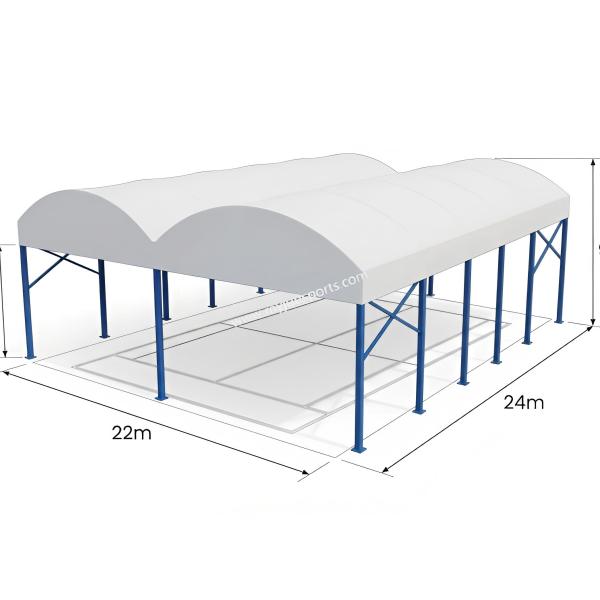
| Regular winter accumulation | 80–120 kg/m² | Engineered canopy with drainage slope |
| Alpine or heavy load zone | 150 kg/m² and above | Custom roof, no flat panels |
A flat canopy with no drainage slope is a failure waiting for the first heavy snowfall, because snow piles instead of sliding and the point load bends the frame. If you are in a snow region, the slope and the rated load must both appear on the drawing, not just the load number on its own.
Where the Requirement Changes by Use
The same wind rating means different things for different buyers. A resort that runs courts as a guest amenity for six months of the year faces a shorter risk window than a public sports club that stays open through every storm season. A rooftop installation at a fitness center carries the extra constraint that the building itself must accept the court's reaction load, so the wind rating and the roof capacity have to be engineered together rather than separately. Indoor courts avoid wind load entirely but still need the snow and foundation logic if the hall is a lightweight tensile structure, because the cover still collects load. The exposure class, not the court model, decides the number.
Failure Risks When You Under-Specify
Under-specifying shows up in predictable ways, and none of them are cheap to fix:
- Frame racking. The structure leans or twists because the corner joints were not rated for the gust, and the glass alignment drifts permanently out of square.
- Glass blowout. Standard 10 mm glass on an exposed site can deflect enough to fracture; certified laminated or 12 mm tempered glass is the mitigation, as we cover in our guide to padel court glass quality.
- Foundation pull-out. Shallow anchors lift in saturated or sandy ground under sustained wind, which is why the base preparation step must match the rating.
- Canopy tear. A light canopy rated for calm weather rips at the seams in a real storm and can take the frame with it.
- Insurance void. Many policies exclude structures that were not built to the local wind code, leaving the owner fully exposed after a loss.
What to Put on the Purchase Order
Treat the wind and snow rating as a line item, not a footnote. Your purchase order should state:
- Local wind zone or 3-second gust design speed.
- Exposure category (B, C, or D) for the exact site.
- Design wind speed the court is engineered to.
- Snow load in kg/m² if the site sees winter accumulation.
- Glass specification referenced to a standard, for example tempered and, where needed, laminated.
- Foundation method and who certifies it.
- Any local structural calculation or stamp required for permitting.
If a quote returns without these lines, the court has not actually been specified — it has been approximated, and the approximation is usually the cheap one.
How Rayjun Handles Site-Specific Engineering
At Rayjun we do not treat the wind rating as a single fixed number across the catalogue. For exposed and coastal projects we supply our wind-resistant panoramic courts with reinforced corner joints and certified tempered glass, and we ask for the site address and exposure class before we issue a structural proposal. Where a local authority requires a calculation, we provide the load data our frame is tested against so your engineer can sign off without re-deriving it. For snow regions we specify the canopy slope and rated load rather than shipping a flat panel and hoping it holds. You can review the full range, including our panoramic and super panoramic models, before you commit to a tier.
FAQ
Q: How do I find my site's wind zone before requesting a quote? A: Check your national building code wind map or ask your local building department for the design gust speed at your address. Give that number plus a photo of the surrounding terrain to the supplier so the exposure class is set correctly.
Q: Can a standard court be upgraded later if I move it to a windier site? A: Moving a court to a more exposed site usually requires new anchors, a possible glass upgrade, and a foundation re-check, which costs more than specifying the higher rating upfront. The frame itself is rarely the cheap part to change after the fact.
Q: Does a higher wind rating change the installation time? A: It can add a day or two because deeper foundations and more anchors take longer to set, but the on-site assembly of the frame is similar. Build the extra time into your opening date rather than skipping it to hit a deadline.
Q: Will my local authority require a structural calculation for a permanent court? A: In most regions a permanent outdoor structure above a certain size needs a calculation stamped by a local engineer, and that calculation must reference the wind and snow rating you specified. Confirm the threshold with your permitting office early so it does not stall the project.
Q: How much does upgrading the wind rating add to the quoted price? A: The increment depends on the gap between the standard and required class, but it is normally a small fraction of the total project cost and far less than a post-storm rebuild. Ask for the upgrade as a separate line so you can see the trade-off directly on the quotation.
Talk to Rayjun Before You Spec the Wind Rating
If you are planning a padel court on a coastal, rooftop, or open site, send your location and intended use to andrew@rayjunhorizon.com and the Rayjun team will return a site-matched wind and snow specification you can put straight on the purchase order. Getting the rating right before you buy is cheaper than correcting it after the first storm.