
Buying a padel court is not simply a choice between different designs. The right court depends on your available space, business model, installation surface, local weather, expected player traffic, and whether the facility will be permanent or movable.
A commercial padel club may prioritize durability and spectator visibility. A hotel may want a premium-looking court with weather protection. A leased venue may need a system that can be removed later without damaging the ground.
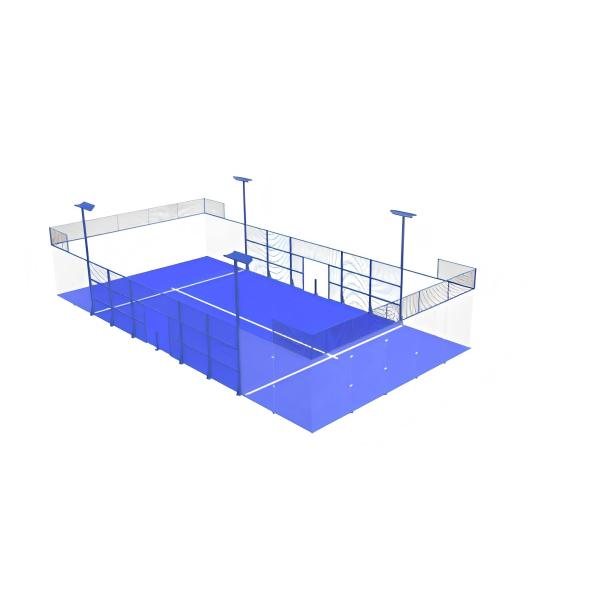
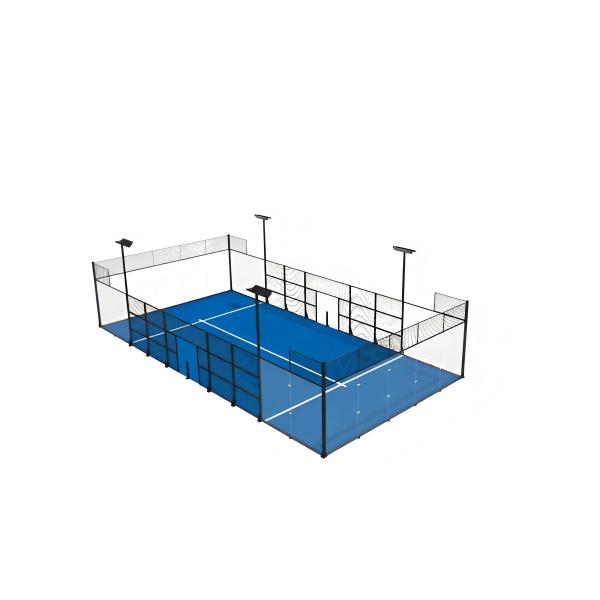
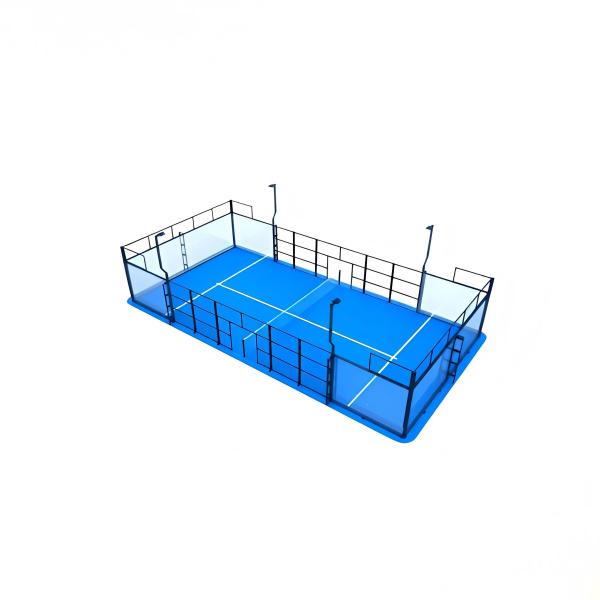
Rayjun offers several padel court configurations for these different project conditions, including Single Padel Courts, Panoramic Courts, Super Panoramic Courts, Wind Resistant Courts, Foundation-Free Platform Courts, Temporary/Relocatable Courts, USA Market Courts, and Integrated Roof Courts.
So, which padel court should you buy?
1. First Decide How Much Space You Have
Space is the first factor to check before comparing court structures.
A conventional doubles padel court generally uses a 10 m × 20 m playing enclosure, while Rayjun's Single Padel Court uses a narrower 6 m × 20 m layout designed for one-on-one play, coaching and space-limited facilities.
Choose a Standard 10 m × 20 m Court If:
- You are building a commercial padel club
- Doubles play will be the main activity
- You have sufficient land or indoor floor space
- You expect regular recreational or competitive use
- You are developing several courts together
Choose a Single Padel Court If:
- Available width is limited
- The court will mainly be used for coaching
- You want an additional training court
- You are developing a hotel, school or private sports facility
- A standard-width court does not fit the available site
Rayjun's Single Padel Court also uses hot-dip galvanized steel, 12 mm tempered glass and artificial padel turf, so reducing the court width does not mean it has to become a lightweight recreational structure.
2. Standard, Panoramic or Super Panoramic?
Once the available space has been confirmed, the next question is usually structural and visual design.
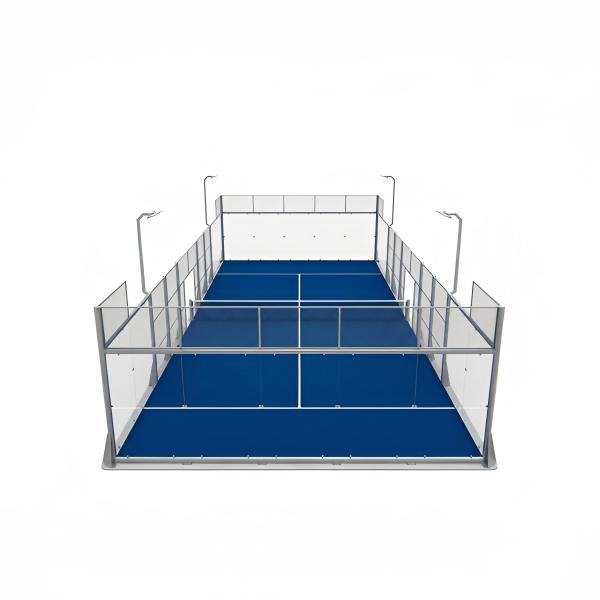
For many commercial projects, a Panoramic Padel Court provides a practical balance between appearance, structural support and investment.
Rayjun's panoramic model uses four reinforced corner tubes to improve overall rigidity while maintaining wide glass visibility. It is positioned between a conventional structure and a more open Super Panoramic design.
Choose a Panoramic Padel Court If:
- You are opening a standard commercial padel club
- You want good visibility without moving to the highest-end structure
- Cost-to-performance balance is important
- The court will be used for training and everyday club play
For premium clubs, tournament venues and projects where spectator visibility or branding is particularly important, a Super Panoramic Padel Court may be more suitable.
Rayjun's Super Panoramic Court removes obstructive rear corner pillars to create a cleaner viewing area and is positioned for professional clubs, events, resorts and higher-end commercial facilities.
Choose a Super Panoramic Court If:
- Your club targets a premium customer segment
- You expect tournaments or exhibition matches
- Spectator visibility matters
- Matches will be filmed or streamed
- Court appearance is part of the venue's branding
In other words, do not choose Super Panoramic simply because it is the more premium model. Choose it when the additional visibility and visual impact contribute to the commercial value of your facility.
3. For Outdoor Courts, Check Wind Conditions Before Price
Outdoor padel courts should never be selected by appearance alone.
Wind exposure varies significantly between an enclosed urban site, an open field, a coastal resort and a rooftop. The steel structure, glass fixation system, foundation and anchoring requirements should therefore reflect the actual installation environment.
Rayjun's Wind Resistant Padel Court is designed for demanding outdoor locations and is engineered for wind speeds up to 154 km/h, using reinforced steel, tempered glass and enhanced structural connections.
Consider a Wind Resistant Padel Court If:
- The site is close to the coast
- The court is exposed to open terrain
- Local wind speeds are relatively high
- You are building an outdoor commercial club
- Structural stability is a major project requirement
Before ordering, provide the supplier with the project address, local wind requirements and installation conditions rather than simply requesting the strongest available court.
Over-specification increases investment unnecessarily, while under-specification can create much more serious structural problems.
4. Buying a Padel Court for the United States?
For US projects, specifications should be evaluated against the conditions of the actual site rather than simply converting a European court quotation into US units.
Rayjun offers a dedicated Padel Court for USA Market with heavy-duty 6" × 6" × 0.12" hot-dip galvanized steel corner tubes, 12 mm tempered safety glass, UV-stable turf and wind resistance up to 90 MPH.
This configuration is intended for commercial clubs, resorts, schools, residential communities and other US projects.
However, US buyers should still confirm:
- Project state and city
- Indoor or outdoor installation
- Required wind design conditions
- Foundation requirements
- Local permitting requirements
- Drainage
- Available installation area
Therefore, a "USA Market Court" should be viewed as a suitable starting configuration, not a substitute for project-specific structural review.
5. Do You Want to Avoid Building a New Concrete Foundation?
Foundation work can become one of the biggest differences between two padel projects.
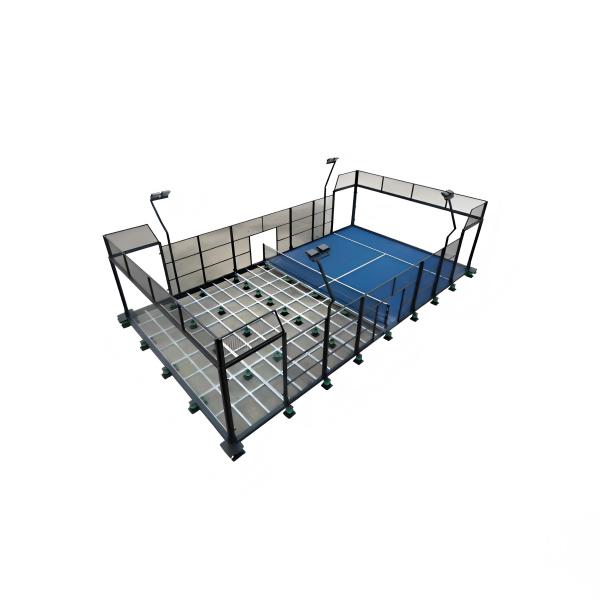
If you already have a suitable hard surface and do not want extensive excavation or new concrete work, consider a Foundation-Free Platform Padel Court.
Rayjun's system uses a modular steel platform and is intended for applications such as rooftops, parking areas, hotels, resorts and temporary commercial spaces. The structure, glass, turf and lighting can be integrated into one platform-based system.
Choose a Foundation-Free Platform Court If:
- A suitable existing surface is already available
- You want to reduce civil construction
- The site is leased
- Permanent modifications are undesirable
- You want faster project deployment
- Future relocation may be useful
But foundation-free does not mean site-free.
The existing surface still needs to be checked for strength, level, drainage, structural loading and other installation conditions.
6. Will You Need to Move the Court Later?
A foundation-free padel court and a relocatable court sound similar, but buyers should distinguish their main purposes.
A foundation-free platform primarily solves the problem of avoiding new concrete foundation construction.
A Temporary/Relocatable Padel Court, by contrast, is designed specifically around installation, dismantling and reuse at another location.
Rayjun's Temporary/Relocatable Padel Court uses a counterweight steel plate system rather than conventional ground anchors. This allows installation without drilling into the existing floor and makes it suitable for exhibitions, seasonal clubs, leased sites, sports halls, parking areas and other locations where permanent alteration is undesirable.
Choose a Temporary or Relocatable Court If:
- You are operating on leased land
- The court is for an event or exhibition
- You want to test a new padel market
- The project is seasonal
- The existing floor cannot be drilled
- You expect to move the court later
For a permanent club with secure long-term land, paying extra for relocation flexibility may not be necessary.
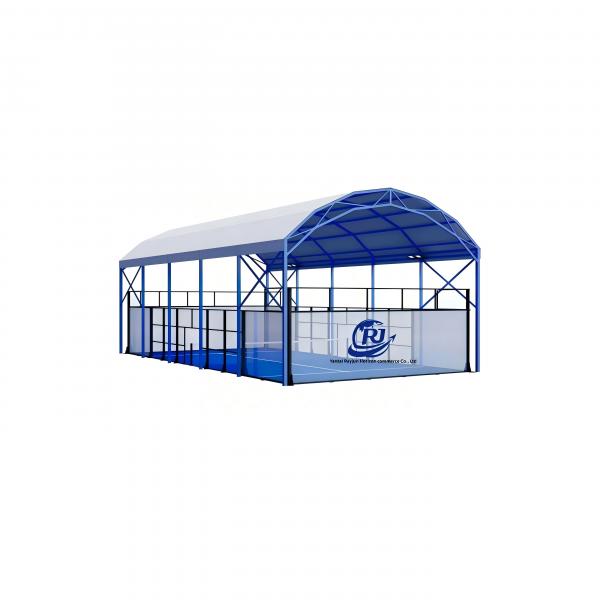
7. Do You Need a Roof?
Weather can have a direct effect on how many hours a commercial court can operate.
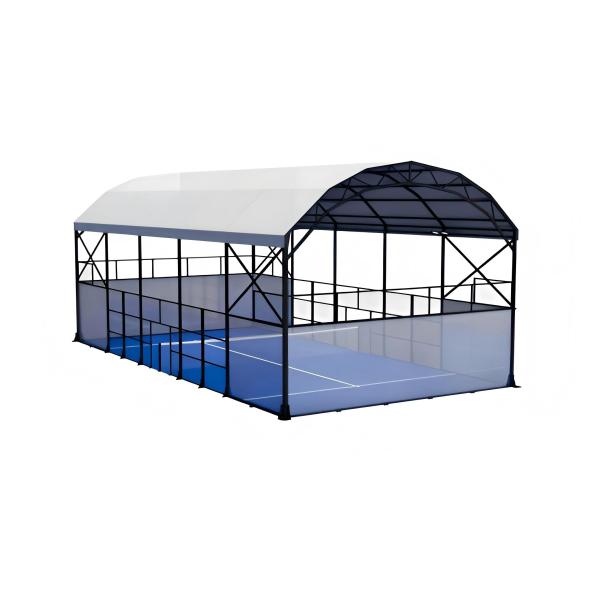
If rain or strong sunlight regularly interrupts play, a roof should be considered during the initial project design rather than treated as an afterthought.
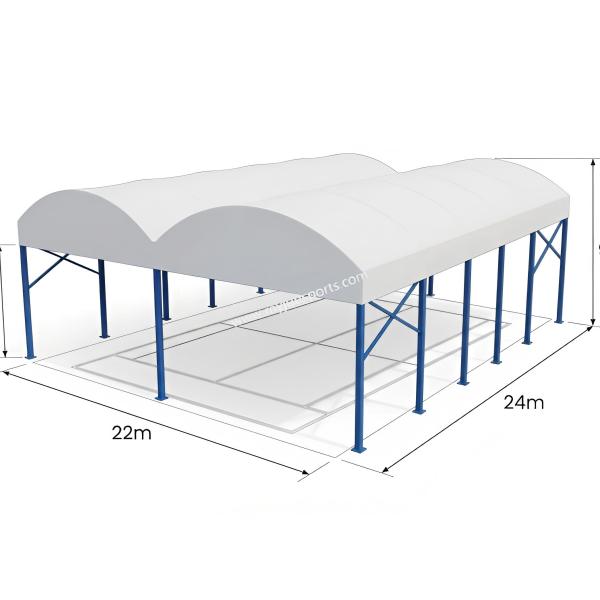
Rayjun's Integrated Roof Padel Court combines the roof and court structure into one coordinated system and can integrate lighting within the roof design. It is intended for clubs, resorts, sports centers and commercial projects that need greater weather protection without constructing a fully enclosed building.
Choose an Integrated Roof Court If:
- Rain frequently affects court availability
- Strong sunlight reduces playing comfort
- You want more consistent year-round operation
- You are developing a premium club or resort
- You are building the roof and court at the same time
If the padel courts already exist, a separate single-court, double-court or retractable canopy may make more sense than replacing the complete court structure. Rayjun also offers these separate canopy systems.
Quick Padel Court Selection Guide
| Your Project | Recommended Court |
|---|---|
| Standard commercial padel club | Panoramic Padel Court |
| Premium club or tournament venue | Super Panoramic Padel Court |
| Limited installation space | Single Padel Court |
| High-wind outdoor location | Wind Resistant Padel Court |
| US commercial project | Padel Court for USA Market |
| Existing hard surface / less civil work | Foundation-Free Platform Padel Court |
| Leased site / event / future relocation | Temporary/Relocatable Padel Court |
| Rainy or very sunny location | Integrated Roof Padel Court |
What Information Should You Give a Padel Court Supplier?
Instead of asking only, "How much does a padel court cost?", provide enough project information for the supplier to recommend the correct structure.
At minimum, prepare:
- Project country and city
- Number of courts
- Indoor or outdoor installation
- Available site dimensions
- Existing ground condition
- Local wind conditions
- Permanent or temporary use
- Preferred panoramic design
- Roof requirement
- Turf, lighting and customization requirements
These details make it much easier to compare quotations on the same technical basis.
A cheaper quotation may simply include a lighter structure, different glass, different corrosion treatment, less foundation work or fewer accessories.
Which Padel Court Should You Buy?
There is no single "best padel court" for every project.
For a typical permanent commercial club, a Panoramic Padel Court is often the practical starting point because it balances visibility, structural performance and investment.
Choose Super Panoramic when premium appearance and spectator experience matter more. Choose a Wind Resistant Court when environmental loads are a major concern. Choose a Foundation-Free Platform when civil work is the problem, and choose a Temporary/Relocatable Court when mobility is the real requirement.
For sites affected by rain or strong sun, consider an Integrated Roof Padel Court from the beginning of the project.
Rayjun supplies multiple padel court structures as well as turf, net systems, LED lighting and roof solutions, allowing the final configuration to be selected around the actual project instead of forcing every buyer into one standard model.
Before requesting a quotation, send us your project location, site dimensions, number of courts, ground condition and local weather requirements. Rayjun can then recommend a padel court configuration that fits both the site and the way you plan to operate the facility.