
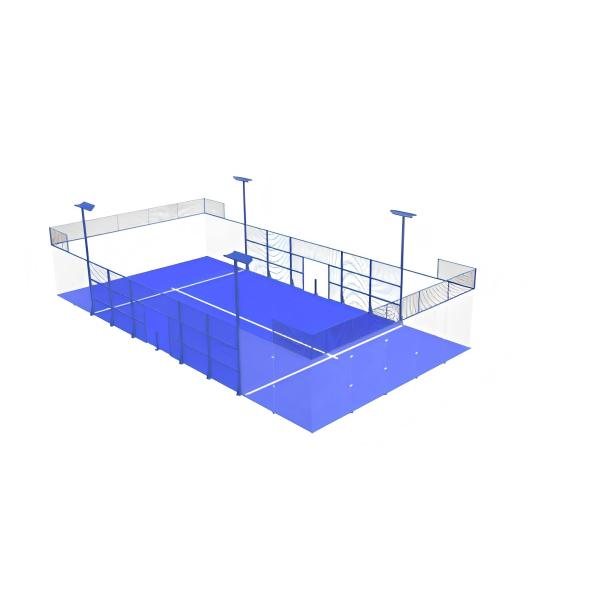
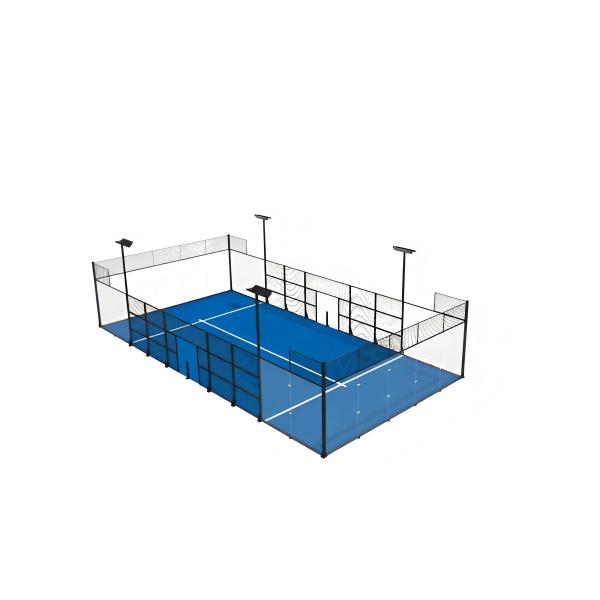
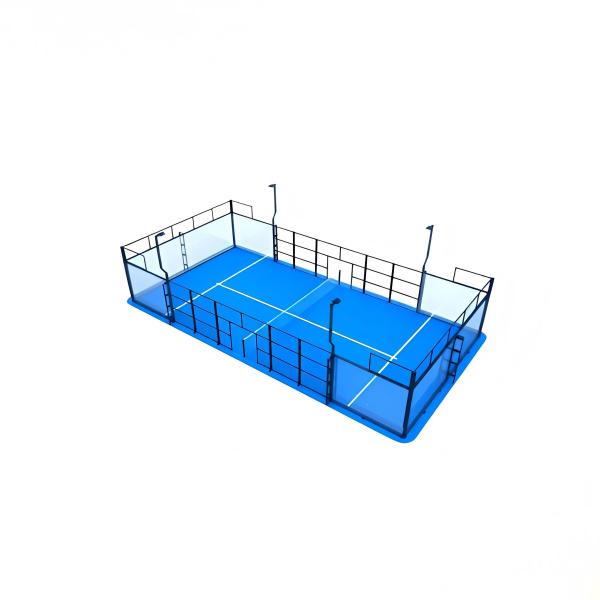
When planning a new padel facility, one of the first decisions is whether to build an indoor or outdoor padel court.
The playing dimensions may be similar, but the project requirements can be very different. Wind loads, corrosion protection, drainage, lighting, roof height, ground conditions and maintenance all influence the final court design and investment.
For padel club owners, sports facility developers, hotels and contractors, understanding these differences before purchasing the padel court can help avoid unnecessary modifications during installation.
Indoor vs Outdoor Padel Court at a Glance
| Factor | Indoor Padel Court | Outdoor Padel Court |
|---|---|---|
| Weather exposure | Low | High |
| Wind resistance | Usually less critical | Important |
| Corrosion protection | Moderate requirement | High priority |
| Drainage | Usually simpler | Essential |
| UV resistance | Less important | Important |
| Lighting | Fully artificial lighting | Natural + artificial lighting |
| Roof/ceiling height | Important | Usually unrestricted |
| Foundation | Depends on building floor | Depends on ground conditions |
| Maintenance | Generally lower | More environmental maintenance |
| Weather interruptions | Minimal | Possible |
Neither option is automatically better. The correct choice depends on the site and business model.
1. Weather Exposure
The biggest difference between indoor and outdoor courts is exposure to weather.
An indoor padel court is protected from rain, strong sunlight and most wind conditions. This creates a more stable playing environment and makes daily operation easier to predict.
An outdoor padel court, however, must withstand:
- Rain
- Direct sunlight
- UV exposure
- Temperature changes
- Wind
- Humidity
- Dust and environmental contaminants
For outdoor installations, the court structure and surface materials therefore need stronger weather resistance.
If your location experiences frequent rain, strong sun or high winds, these factors should be considered before selecting the court configuration.
2. Wind Resistance Is Much More Important Outdoors
Wind load is one of the most important structural considerations for an outdoor padel court.
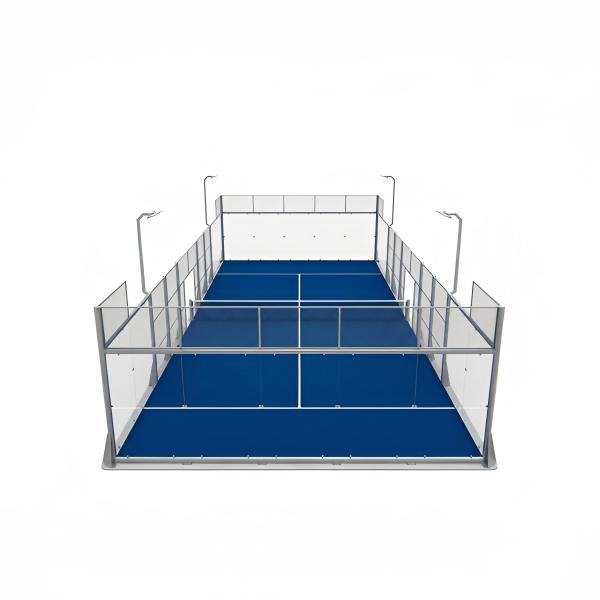
Padel courts contain large areas of tempered glass and steel mesh. In exposed locations, wind can place significant pressure on the structure.
A court installed between buildings in a protected urban environment may face very different conditions from one installed:
- Near a coastline
- On open land
- On a rooftop
- At a resort
- In a high-wind region
For these projects, a reinforced or wind-resistant padel court may be more appropriate than a standard structure.
Buyers should provide the supplier with the project location and required wind conditions rather than selecting a court based only on appearance.
Indoor courts are normally less affected by external wind loads, although the building itself still needs to meet local structural requirements.
3. Corrosion Protection
Steel is a major structural component of a padel court, so corrosion protection is especially important outdoors.
For an outdoor court, hot-dip galvanized steel combined with a protective powder coating can provide better long-term resistance against moisture and environmental exposure.
This becomes particularly important in:
- Coastal locations
- Humid climates
- Areas with frequent rain
- Resorts near the sea
- Outdoor facilities operating throughout the year
Indoor courts generally face less aggressive environmental exposure, but corrosion protection is still beneficial for long-term durability.
For a commercial padel club, better structural protection can reduce maintenance requirements over the life of the facility.
4. Artificial Turf Requirements
Both indoor and outdoor courts require artificial turf designed for padel, but outdoor surfaces face additional challenges.
Outdoor turf should have good UV resistance and drainage performance because it is exposed directly to sunlight and rain.
Indoor turf does not experience the same level of UV exposure and usually has more controlled environmental conditions.
However, the playing surface should still be selected according to:
- Expected daily player traffic
- Ball response requirements
- Player traction
- Sand filling
- Maintenance frequency
For commercial clubs with high court utilization, durability is often more important than simply selecting the lowest-cost turf option.
5. Drainage for Outdoor Padel Courts
Drainage is another major difference.
Indoor facilities usually have a controlled floor system, so rainwater drainage is not a major issue.
Outdoor courts need proper water management.
Poor drainage can result in:
- Water accumulation
- Longer court downtime after rain
- Surface contamination
- Turf deterioration
- Uneven playing conditions
Before building an outdoor padel court, the contractor should evaluate the site slope, drainage channels, foundation and surrounding ground conditions.
The court structure itself cannot compensate for a poorly prepared site.
6. Ceiling Height for Indoor Courts
Indoor courts avoid most weather-related problems, but they introduce another important consideration: available building height.
A building may have sufficient floor area for a 10 × 20 m court but still be unsuitable if the ceiling is too low.
When evaluating an indoor site, check:
- Clear ceiling height
- Roof beams
- Ventilation ducts
- Lighting fixtures
- Fire protection systems
- Hanging equipment
- Structural columns
The usable height above the playing area is more important than the nominal height of the building.
This should be verified before ordering court equipment or signing a lease for a new padel club.
7. Lighting Requirements
Indoor padel courts depend almost entirely on artificial lighting.
Lighting layout therefore needs to be coordinated carefully with the court structure to provide consistent illumination without excessive glare.
Outdoor courts benefit from daylight but still require LED lighting for evening operation.
For commercial facilities, good lighting affects:
- Playing comfort
- Operating hours
- Customer experience
- Video recording
- Tournament use
Lighting should ideally be planned together with the court rather than added after installation.
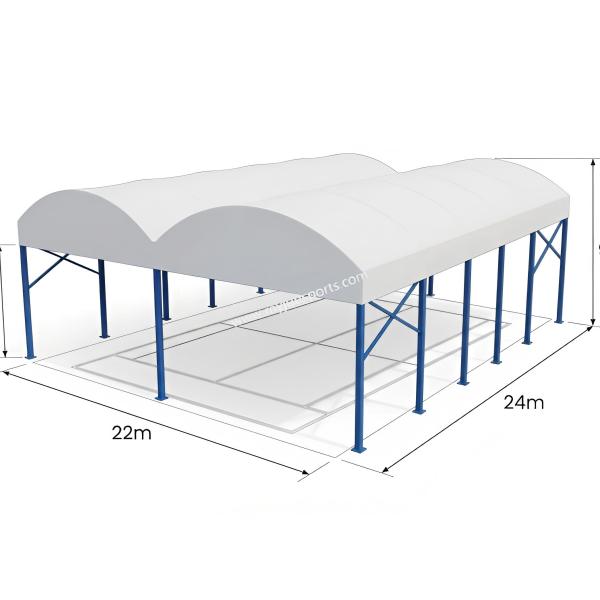
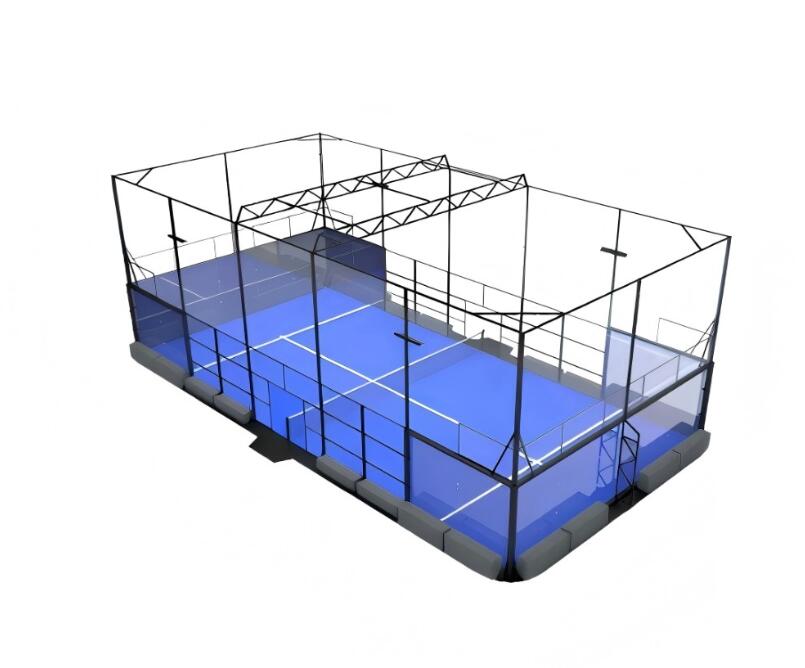
8. Should an Outdoor Court Have a Roof?
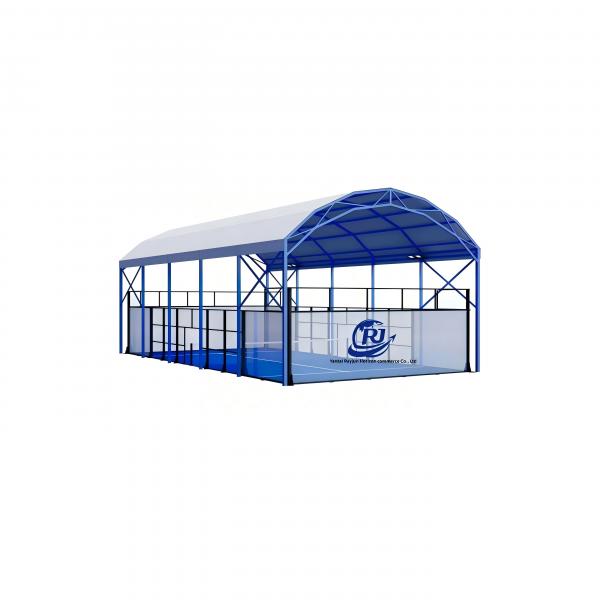
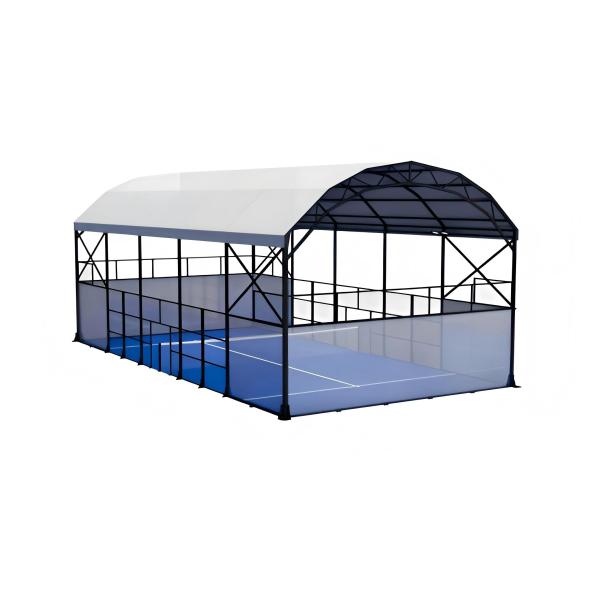
An outdoor padel court does not necessarily need a roof, but a roof or canopy can significantly improve court availability in certain climates.
Consider a covered or integrated-roof padel court if your location experiences:
- Frequent rain
- Strong sunlight
- High temperatures
- Seasonal weather interruptions
A roof can extend playable hours and make revenue more predictable for commercial clubs.
However, adding a roof also increases structural complexity and investment.
If weather disruption is limited, an open outdoor court may still be the more economical choice.
9. Foundation and Ground Conditions
Both indoor and outdoor courts require a stable supporting surface.
For conventional outdoor projects, this often involves appropriate concrete foundation work and drainage preparation.
Indoor courts may be installed on an existing structural floor if the floor satisfies the required strength, flatness and installation conditions.
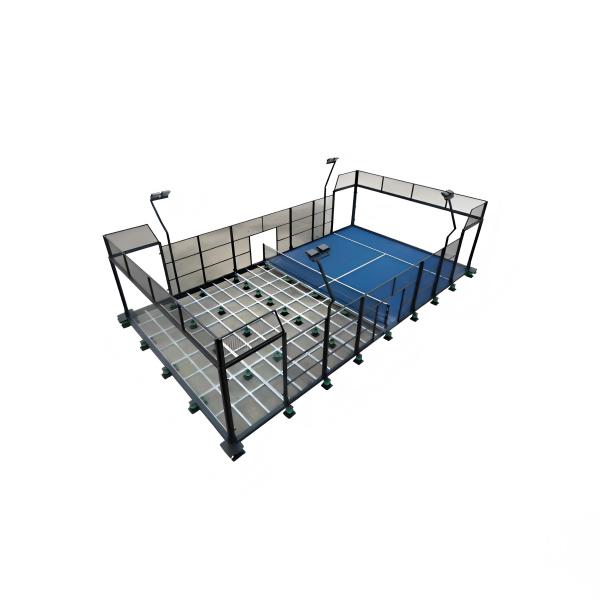
For sites where new concrete construction is difficult, a foundation-free platform padel court can also be considered.
This type of system is useful for suitable existing surfaces, leased facilities and projects where permanent ground modification should be minimized.
Foundation-free does not mean the ground condition can be ignored. Load capacity, level, drainage and structural suitability must still be evaluated.
10. Maintenance Differences
Indoor courts generally require less maintenance related to weather exposure.
Outdoor courts need more regular inspection of:
- Steel structure
- Protective coatings
- Glass fittings
- Turf condition
- Drainage system
- Net system
- Lighting
- Bolts and structural connections
In coastal or harsh-weather environments, inspection frequency may need to be increased.
Regular maintenance helps extend the service life of the court and identify small problems before they become expensive repairs.
Which Padel Court Should You Choose?
Choose an indoor padel court when:
- Year-round operation is important
- Weather conditions are unpredictable
- A suitable building is already available
- You want lower weather-related maintenance
- Consistent playing conditions are a priority
Choose an outdoor padel court when:
- Suitable outdoor land is available
- Building construction costs need to be avoided
- Local weather is suitable
- Natural ventilation and an open environment are preferred
- The project can accommodate drainage and wind requirements
For outdoor sites with stronger wind exposure, consider a reinforced wind-resistant structure. For rainy or sunny locations, an integrated roof or canopy may improve usability.
Final Thoughts
The main difference between an indoor and outdoor padel court is not the court size—it is the environment surrounding the court.
Indoor projects require careful attention to building height, lighting, ventilation and floor conditions. Outdoor projects require greater attention to wind resistance, corrosion protection, drainage, UV exposure and weather protection.
Before purchasing a court, provide your supplier with the project location, indoor or outdoor application, available dimensions, ground conditions, local wind conditions and expected court usage.
RAYJUN provides different padel court configurations for indoor and outdoor commercial projects, including panoramic courts, wind-resistant courts, foundation-free platform courts and integrated roof solutions. Choosing the court around the actual site conditions can help create a safer, more durable and commercially practical padel facility.