
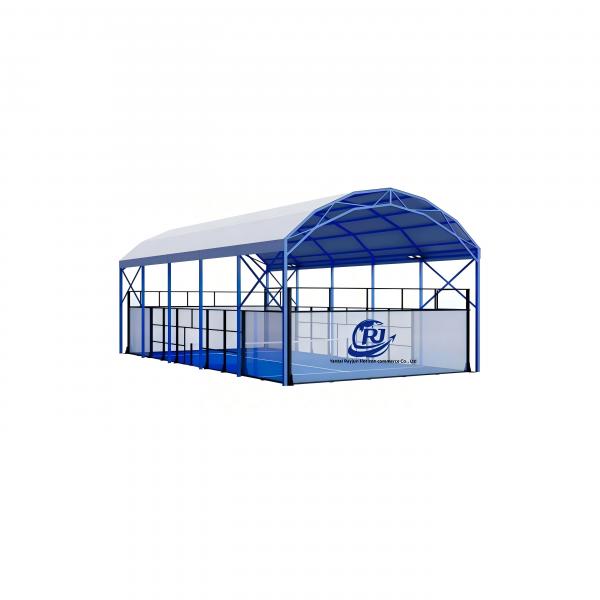
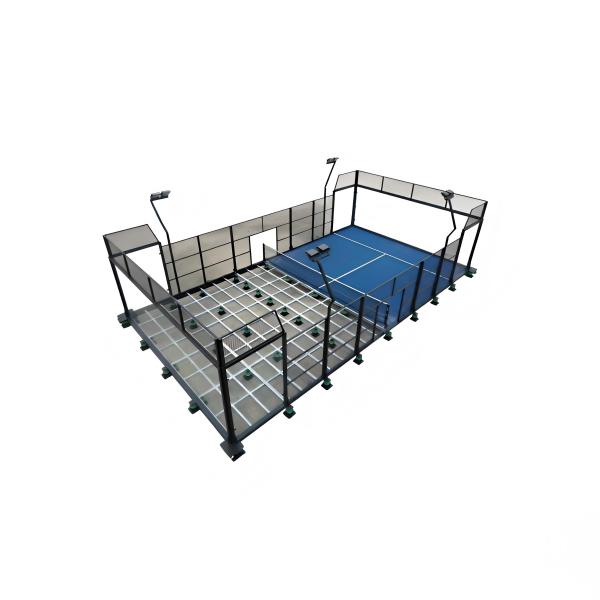
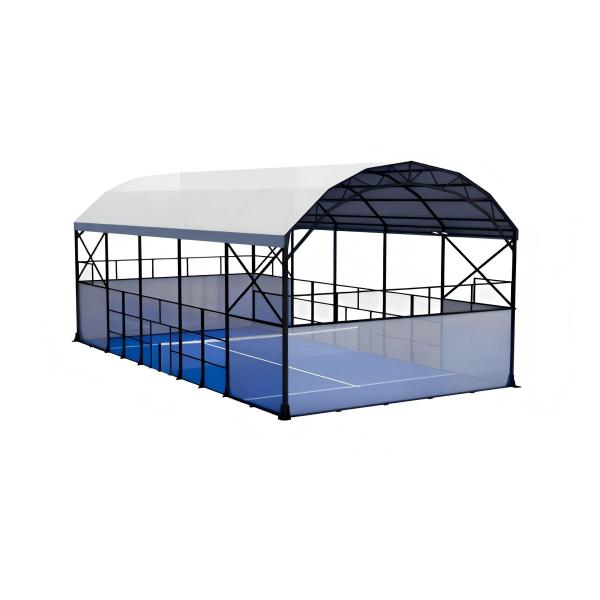
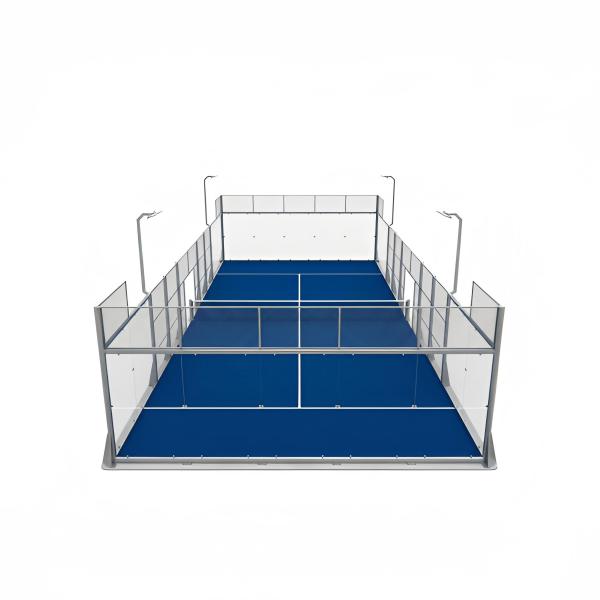
Before importing a padel court, buyers should verify the complete equipment specification, supplier quotation, destination-country compliance, shipping method, customs documentation, installation responsibilities, and warranty terms. The lowest factory price may not represent the lowest delivered project cost if freight, import duties, foundations, electrical work, or installation equipment are excluded. Buyers sourcing a Rayjun padel court system should confirm the complete supply scope and delivery responsibilities before paying a deposit.
What Should Be Included in a Padel Court Import Quotation?
The first task is to identify exactly what the supplier is selling.
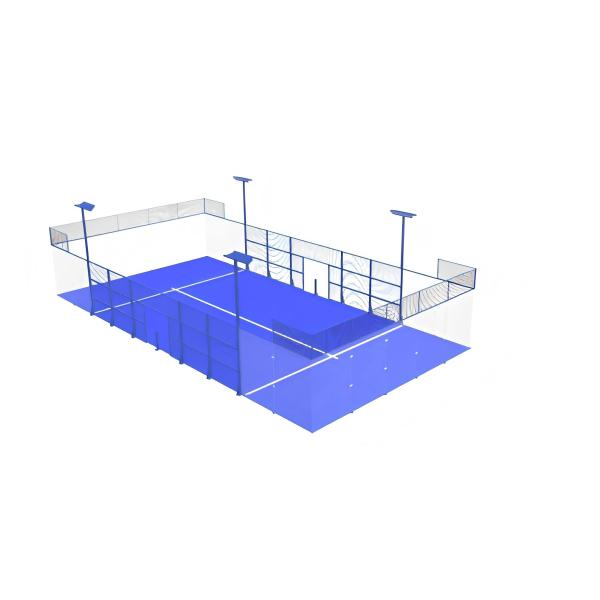
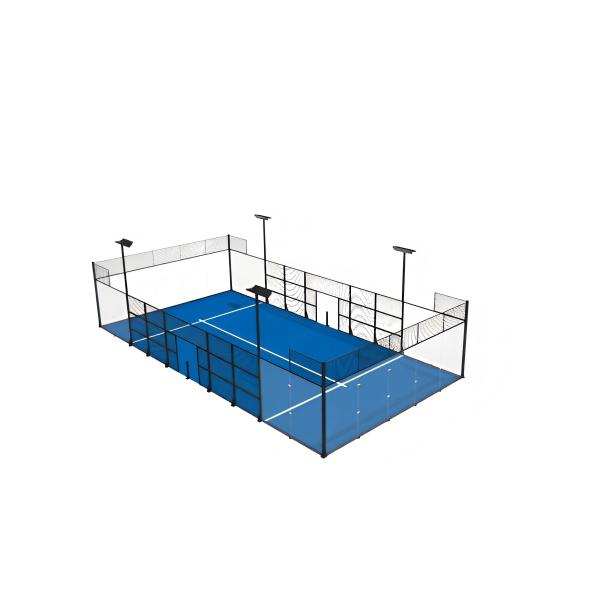
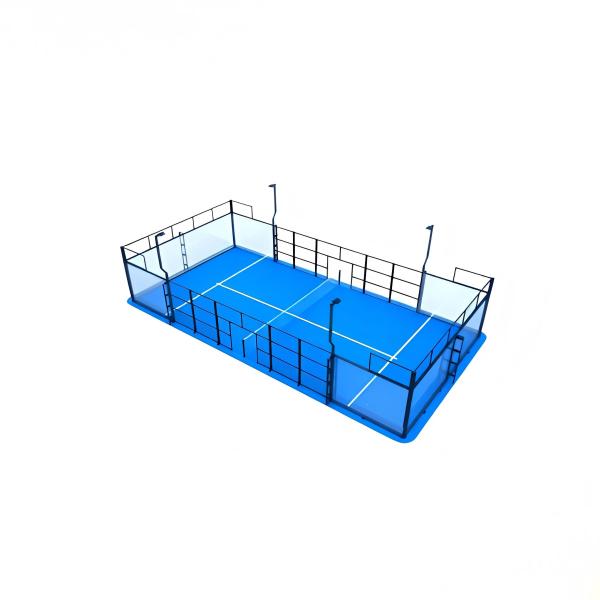
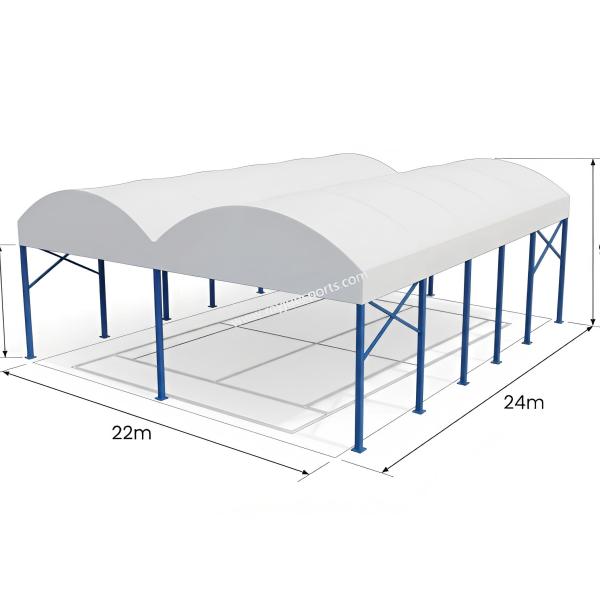
A quotation may cover the steel structure and glass enclosure only, or it may include artificial turf, netting, lighting, fasteners, and additional components. A canopy or foundation-free platform may be offered as a separate system, so buyers should not assume these items are included in the standard court price.
Request a written quotation that identifies:
-
Court model and quantity.
-
Steel structure material, dimensions, and finish.
-
Glass type, thickness, dimensions, and documentation.
-
Artificial turf specifications and installation accessories.
-
Net system and required fittings.
-
Lighting equipment and electrical specifications.
-
Canopy or roof components, if applicable.
-
Foundation drawings and anchoring requirements.
-
Packing method and shipment dimensions.
-
Installation instructions and technical support.
-
Warranty, spare parts, and replacement procedures.
Rayjun lists single, panoramic, super panoramic, wind-resistant, temporary, foundation-free, rooftop, and integrated-roof court options. The appropriate package depends on the project site and intended use.
Review the Rayjun padel court product range and request a bill of materials for the exact configuration.
How Can Buyers Calculate the Total Import Cost?
The total landed project cost includes more than the equipment invoice.
A practical budgeting structure is:
Total project cost = equipment + export packing + international freight + insurance + import charges + local transport + site work + installation + commissioning
Depending on the destination and contract, some of these items may be included in the equipment price or handled by separate contractors. Avoid counting the same expense twice, and identify excluded items explicitly.
| Cost category | What to confirm |
| Equipment | Court structure, glass, turf, net, lighting, and optional accessories |
| Packing | Export packaging, protective materials, and loading |
| International freight | Ocean, air, or other transport method and quoted scope |
| Insurance | Coverage, insured value, and claims process |
| Customs | Tariff classification, duties, taxes, and clearance charges |
| Destination handling | Port charges, unloading, and local transport |
| Site preparation | Groundworks, drainage, foundations, and utilities |
| Installation | Labor, lifting equipment, tools, and supervision |
| Commissioning | Alignment, lighting checks, inspection, and handover |
| Ongoing support | Spare parts, maintenance, and warranty service |
Import duties and taxes vary by destination, product classification, origin, and applicable trade measures. Buyers should confirm the relevant tariff treatment with a qualified customs broker rather than relying on a generic percentage.
Which Shipping Method Is Suitable for a Padel Court?
Sea freight is commonly considered for complete court systems because steel structures, glass, turf, and accessories can create substantial shipment volume. Air freight may be considered for urgent replacement components, but its cost can be disproportionate for bulky equipment.
The right shipping plan depends on shipment dimensions, weight, delivery urgency, destination port, handling requirements, and the project's installation schedule.
Before booking, request:
-
Packing list and commercial invoice details.
-
Package dimensions and gross weight.
-
Container loading plan where applicable.
-
Glass protection and handling instructions.
-
Shipping marks and package identification.
-
Estimated production and dispatch dates.
-
Required export and destination documentation.
Glass requires particular care because edge damage and impact can cause breakage. Buyers should confirm how glass panels are supported, separated, protected, and secured during transport.
Which Incoterm Should Buyers Choose?
Incoterms define important responsibilities between seller and buyer, including delivery, costs, and the transfer of risk under the agreed rule. They do not replace the sales contract, product specification, payment terms, or local import requirements.
Common options include:
-
EXW: The buyer generally assumes extensive responsibility for collection and onward transport, subject to the agreed arrangement.
-
FOB: For qualifying sea or inland waterway shipments, the seller delivers the goods on board the vessel at the named port, and the buyer generally arranges the main carriage.
-
CIF: For qualifying sea or inland waterway shipments, the seller pays the cost and freight to the named destination port and obtains the required insurance, while risk generally transfers when the goods are on board the vessel at the port of shipment.
-
DAP: The seller delivers to the named destination, ready for unloading, while the buyer generally handles import clearance and applicable import duties and taxes.
-
DDP: The seller assumes the specified delivery obligations, including import clearance and duties, subject to its ability to legally perform those obligations in the destination market.
The exact rule should be written with a precise named place or port and the applicable Incoterms edition. For buyers unfamiliar with international logistics, request a side-by-side quotation that clearly identifies freight, insurance, customs clearance, duties, and destination handling.
How Can Buyers Verify Supplier Quality Before Importing?
A supplier should be evaluated on product documentation, manufacturing controls, communication, delivery capability, and the ability to support the specific project.
Useful checks include:
-
Confirm the company's legal identity and contact information.
-
Review the exact court model and approved technical drawings.
-
Request material specifications and applicable test reports.
-
Confirm glass, steel, turf, and lighting requirements separately.
-
Ask for production photos, inspection records, or a suitable factory inspection arrangement.
-
Agree on packaging, shipment, and acceptance criteria.
-
Document the process for resolving missing, damaged, or nonconforming components.
Rayjun's company profile provides published company information, including its padel court manufacturing background. Buyers should independently verify any qualifications, certifications, or project references that are material to their procurement decision.
What Technical Documents Are Needed for Installation?
The court supplier and local contractor need to work from compatible drawings and specifications.
Request a general arrangement drawing showing the court dimensions, structural layout, glass-panel arrangement, anchoring points, and required clearances. Where applicable, obtain structural calculations, foundation details, lighting layouts, electrical specifications, and installation instructions.
The foundation design must match the actual site conditions and structural loads. A court advertised as foundation-free may use a modular platform, but that does not mean it can be installed without site assessment, anchoring considerations, or applicable permits.
Rayjun lists a foundation-free platform padel court and other installation configurations. Buyers should confirm what civil work is avoided, what site preparation remains necessary, and which components are included.
Who Is Responsible for Customs, Installation, and After-Sales Support?
Responsibility should be agreed before the order is placed.
The supplier may provide equipment drawings, packing documents, installation manuals, or technical guidance. Local contractors may be responsible for groundworks, unloading, foundations, electrical connections, and on-site assembly. The exact division depends on the contract and the supplier's service scope.
Before signing, identify who will:
-
Prepare and verify import documentation.
-
Arrange international and local transportation.
-
Unload and store the shipment.
-
Prepare foundations and utilities.
-
Assemble the structure and install glass.
-
Connect and test lighting.
-
Inspect the finished court.
-
Handle missing parts, damage, and warranty claims.
Do not assume that a quotation for a complete court automatically includes on-site installation or local building approval. These items should be expressly included or excluded.
For quotations and project coordination, buyers can use the Rayjun inquiry page.
What Are the Most Common Importing Risks?
Unclear specifications: A mismatch in glass dimensions, steel connections, or accessory quantities may delay installation.
Incomplete quotations: Freight, customs, unloading, foundations, or installation may be excluded from the initial price.
Unverified compliance: A product specification from the supplier's home market may not satisfy the destination's building, electrical, or safety requirements.
Poor packaging: Damage to glass or structural components may create expensive replacement and schedule problems.
Unclear delivery terms: Buyers may misunderstand who is responsible for insurance, customs clearance, or destination handling.
Unconfirmed site readiness: Equipment may arrive before the foundation, access route, utilities, or lifting equipment is ready.
These risks can be reduced through a signed technical specification, a documented bill of materials, clear Incoterms, pre-shipment inspection where appropriate, and a project schedule that coordinates production, freight, and installation.
Frequently Asked Questions
What documents should I request when importing a padel court?
Request the commercial invoice, packing list, shipping documents, technical drawings, product specifications, and any destination-specific compliance documentation. The exact customs and certification requirements depend on the importing country and the selected equipment.
Is the cheapest padel court quotation the most economical option?
Not necessarily. Freight, import charges, foundations, installation, lighting, and replacement support can materially change the total project cost. Compare quotations using the same equipment scope and delivery basis.
Can a padel court be imported without a local installation contractor?
The equipment can sometimes be supplied for local installation, but the project still requires appropriate site preparation, assembly, and compliance checks. Confirm the supplier's installation instructions and whether local structural or electrical professionals are required.
How can I reduce the risk of glass damage during shipping?
Request a documented packing method, protective separation between panels, suitable support, package identification, and handling instructions. Agree on the inspection and claims process before shipment, including the evidence required if damage is discovered on arrival.
Should I buy a court with lighting and a canopy from one supplier?
A single supplier may simplify coordination, but the buyer should still compare technical compatibility, warranty coverage, and total cost. Confirm that the lighting layout, roof structure, drainage, and electrical connections are designed to work together.
When should I arrange the foundation and site preparation?
Begin site planning before the court is manufactured, using the approved layout and foundation drawings. Finalize the site readiness schedule against the expected dispatch and arrival dates to reduce storage costs and installation delays.
Request an International Padel Court Quotation
Rayjun supplies padel court systems, canopies, lighting, and related equipment for international sports projects. Contact Rayjun at andrew@rayjunhorizon.com with your destination country, court quantity, preferred configuration, site drawings, and shipping requirements to request a quotation covering the relevant equipment and delivery scope.