
How to Choose a Padel Court for High-Wind Areas
Choosing a padel court for a high-wind location requires more than selecting a strong steel frame or thicker glass panels. Coastal clubs, island resorts, open sports facilities, and rooftop venues must consider wind pressure, structural connections, anchoring, foundation conditions, and corrosion protection before purchasing a court.
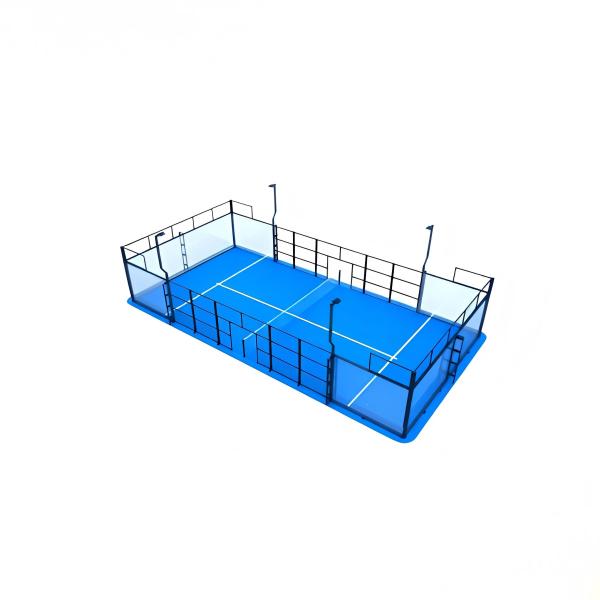
A padel court combines steel columns and beams, mesh panels, large glass sections, and sometimes lighting or canopy structures. Wind forces act on these components differently, so the entire system must be designed to transfer loads safely to the supporting structure and foundation.
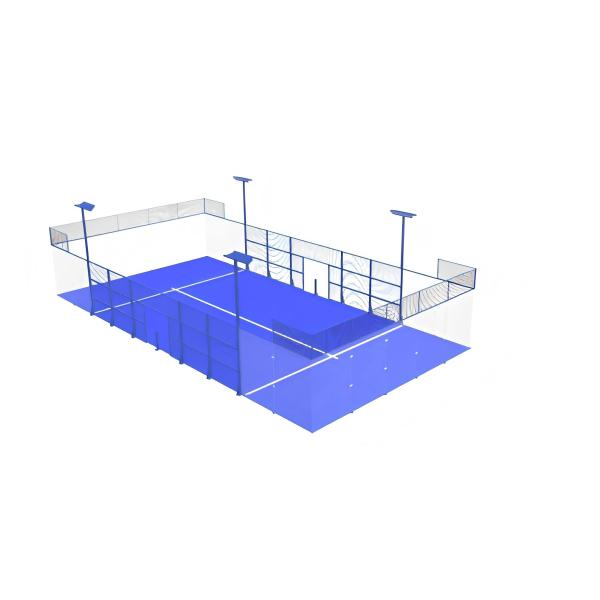
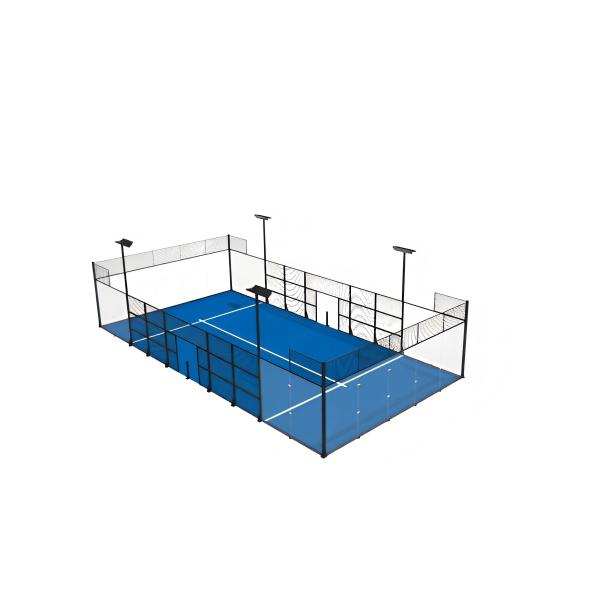
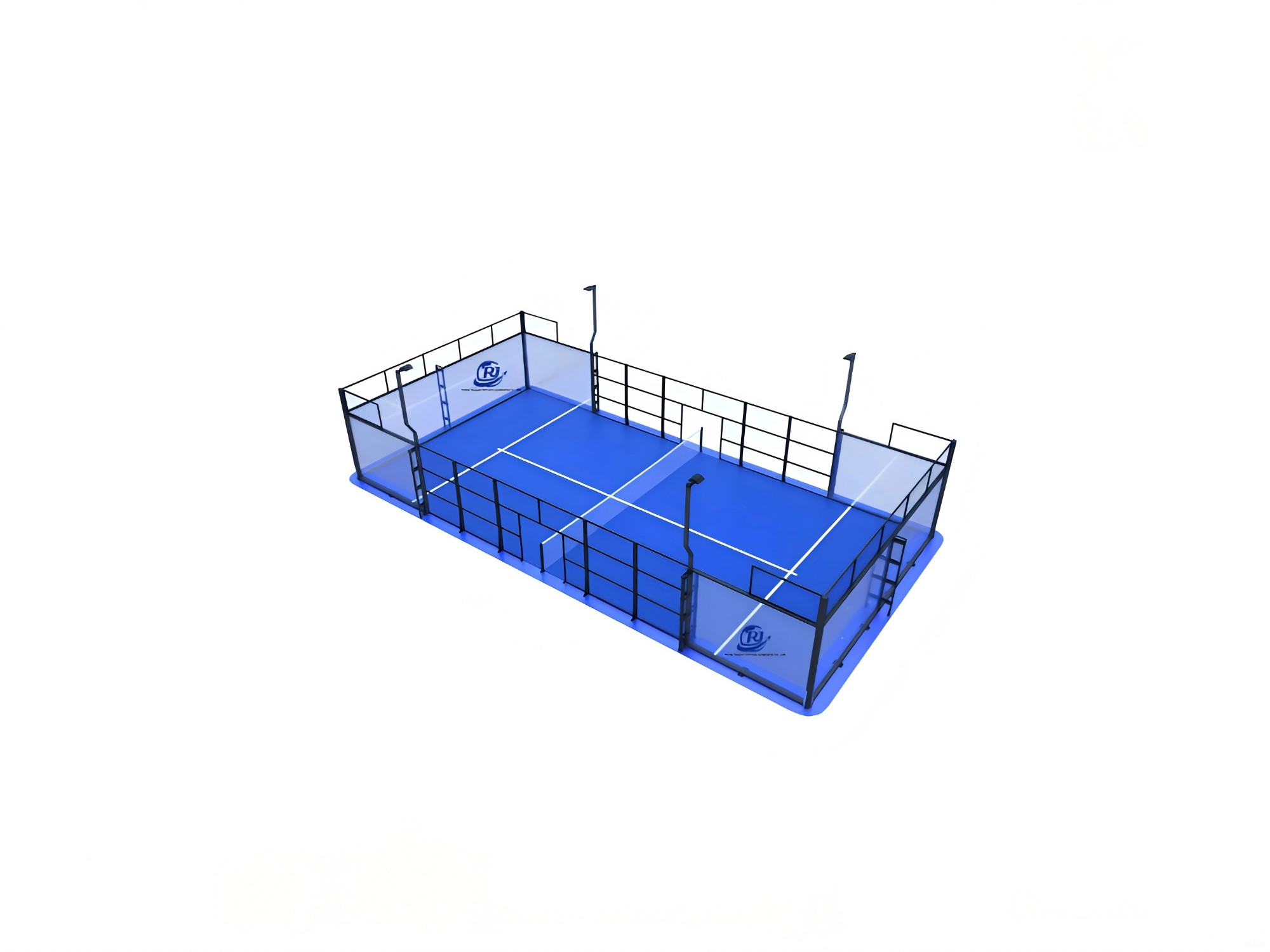
Rayjun Sports offers a dedicated Wind Resistant Padel Court featuring a reinforced steel structure and tempered glass panels for projects exposed to strong winds. Before selecting a configuration, project developers should evaluate local conditions and confirm that the proposed court meets the engineering requirements of the installation site.
1. Identify the Wind Conditions at Your Installation Site
The first step in choosing a padel court for high-wind areas is understanding the wind exposure at the actual site. A court installed between buildings may experience different wind conditions from one located on an exposed coastline or an open field.
Coastal and Island Locations
Coastal clubs and island resorts may experience strong winds, salt spray, high humidity, and frequent weather changes. These conditions affect both structural stability and the long-term durability of exposed metal components.
When specifying a court for a coastal project, confirm the local design wind speed, applicable structural requirements, steel protection system, fastener specifications, and maintenance expectations.
Corrosion protection is especially important near the sea. Hot-dip galvanized steel combined with an appropriate exterior coating can help protect the structure, but the required protection level depends on the actual exposure conditions and project specifications.
Open Fields and Unprotected Sports Facilities
Courts in open fields, suburban developments, and large commercial sports facilities may have limited protection from surrounding buildings or vegetation.
For these locations, assess the terrain, surrounding obstacles, local wind conditions, and the potential for strong gusts. A dedicated wind-resistant structure may be more appropriate than a standard court selected without a site-specific engineering review.
Rooftop Padel Courts
Rooftop installations require particular attention because wind exposure can differ significantly from ground-level conditions. Building height, surrounding structures, roof geometry, and local wind patterns can affect the loads acting on the court.
Before purchasing a rooftop padel court, a qualified structural engineer should assess the building's load-bearing capacity, wind loads, anchoring arrangements, waterproofing, and drainage.
A reinforced court structure does not automatically make a rooftop installation suitable. The building and court must be evaluated as a complete system.
2. Evaluate the Steel Frame and Structural Connections
The steel structure is a major factor in the performance of a wind-resistant padel court. However, choosing a court based only on steel thickness or material grade does not provide a complete assessment of structural reliability.
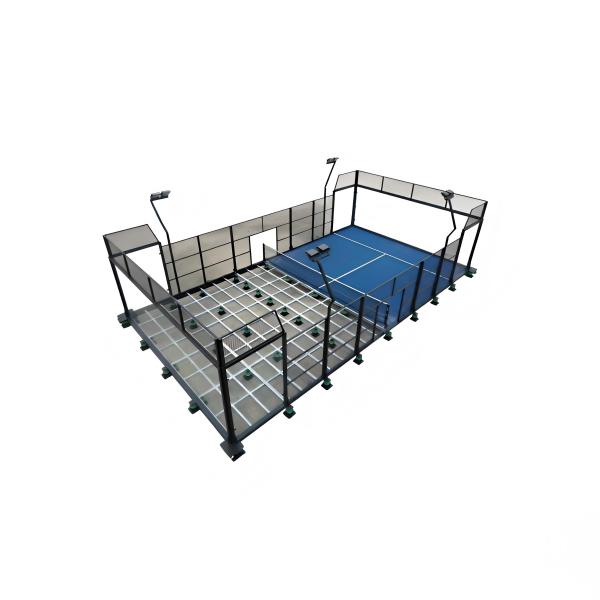
The frame, beams, columns, base plates, fasteners, and anchoring system must work together to resist the applicable loads.
Steel Material and Section Dimensions
Ask the supplier to identify the steel material and provide the relevant dimensions of the main structural members. For Rayjun's wind-resistant court, the published product information identifies Q235 steel as the frame material.
The suitability of the material and section dimensions depends on the complete structural design, including member spacing, reinforcement, connection details, and the wind loads specified for the project.
Column and Beam Design
The dimensions and arrangement of columns and beams affect how wind forces are transferred through the court structure.
Review the structural drawings to understand the main support positions, reinforcement arrangements, and connections between the principal frame members.
A court with a panoramic appearance or fewer visible supports may have different structural demands from a conventional configuration. Design decisions should therefore account for the intended court layout rather than appearance alone.
Bolts, Welds, and Base Plates
Connections are just as important as the main steel members. Wind loads can generate forces at joints, anchor points, and base plates, making connection design essential to overall stability.
Before ordering, request the available structural drawings and confirm the requirements for fasteners, welds, base plates, and anchoring. The foundation or supporting surface must be capable of receiving the loads transferred by the complete court system.
3. Check the Glass and Mesh Panel Systems
Glass walls and metal mesh panels are integral parts of a padel court, and both must be considered when evaluating wind resistance.
Tempered Glass Panels
Large glass panels contribute to the court's appearance and playing characteristics, but they also require suitable support and secure fixing under the specified design conditions.
When reviewing a court for high-wind locations, confirm the glass specification, fixing arrangement, supporting frame, and relevant structural documentation.
Glass thickness alone does not establish wind resistance. Panel dimensions, support spacing, fixing details, frame movement, and the design loads all influence performance.
Ask the supplier to explain how the glass panels are supported and how the fixing system is designed for the intended installation environment.
Mesh Panels and Their Connections
Mesh panels allow airflow through parts of the enclosure, but their resistance to wind depends on mesh geometry, frame construction, connection details, and the loads used in the design.
Check how the mesh is attached to the steel structure and whether the panel arrangement matches the approved drawings. Also inspect the fasteners and surrounding frame components during routine maintenance.
Structural Compatibility
The glass, mesh, steel frame, and foundation should not be evaluated as independent components. A reliable court design considers how forces move through the entire structure.
For commercial projects, request technical information covering the complete system rather than relying only on individual component specifications.
4. Confirm the Required Wind Resistance Before Ordering
One of the most important procurement steps is translating local wind conditions into a clear technical requirement.
Wind speed figures can refer to different averaging periods, gust conditions, measurement heights, or design methods. Two products quoting the same numerical wind speed may not have been assessed under equivalent conditions.
Before comparing suppliers, clarify the following:
| Evaluation Item | What to Confirm |
|---|---|
| Local Design Wind Speed | The applicable design value for the installation location |
| Wind Speed Basis | Whether the figure represents a gust, sustained wind, or another defined measure |
| Terrain and Exposure | Whether the design accounts for coastal, open-field, urban, or rooftop conditions |
| Structural Calculations | Whether the complete court structure has been assessed for the relevant loads |
| Glass and Mesh | Whether the panel systems and their connections are included in the assessment |
| Anchoring and Foundation | The required base arrangement and supporting conditions |
| Applicable Standards | The engineering standards and local regulations used for the project |
| Supporting Evidence | Available calculations, drawings, test reports, or other technical documentation |
Rayjun's published wind-resistant court information states a wind-resistance capability of up to 154 km/h. This figure should be treated as a product-specific claim, not a universal guarantee for every installation.
Before specifying the court for a particular project, confirm the applicable design assumptions, supporting documentation, installation conditions, and suitability for the local requirements with the supplier and qualified project engineer.
5. Select a Suitable Foundation and Anchoring System
Even a reinforced steel frame cannot perform as intended if the supporting structure is inadequate.
The court's anchoring and foundation arrangement must transfer the design loads safely into the ground, slab, or other approved supporting structure.
Ground-Level Outdoor Courts
For ground-level installations, review the soil or existing base condition, foundation design, anchor positions, drainage, and surface level.
The foundation must be designed for the loads generated by the selected court and the conditions at the site. Dimensions and reinforcement should be established through the appropriate engineering process rather than copied from another project.
Rooftop and Elevated Installations
For rooftop or elevated courts, verify the building's structural capacity and the permitted load distribution before selecting the installation arrangement.
The engineering review should consider the court's weight, wind forces, anchoring method, roof waterproofing, and maintenance access.
If drilling into the roof is restricted, do not assume that a different mounting arrangement will automatically be safe. Any alternative support system must be designed and approved for the actual site.
Foundation Accuracy
Correct alignment and levelness are important for the steel frame, glass installation, and finished playing surface. The supporting base should meet the tolerances specified in the approved installation drawings.
For high-wind projects, follow the supplier's anchoring requirements and the project engineer's instructions throughout installation.
6. Consider Corrosion Protection for Long-Term Outdoor Use
Wind resistance is only one part of the purchasing decision. Outdoor courts must also withstand moisture, temperature changes, ultraviolet exposure, and other environmental conditions.
For coastal installations, salt exposure can accelerate corrosion around welds, cut edges, bolts, mesh connections, and base plates.
When comparing court suppliers, ask about:
-
Steel galvanizing and exterior coating specifications.
-
Protection of welds, cut edges, and connection points.
-
Fastener material and corrosion resistance.
-
Coating inspection and repair procedures.
-
Recommended maintenance frequency for the intended environment.
Rayjun's wind-resistant court product information describes a hot-dip galvanized and powder-coated steel structure. Confirm the exact treatment specification and whether additional protection is appropriate for the project's salt exposure and environmental conditions.
A practical maintenance plan should include inspections after severe weather, checks for loose connections or damaged coatings, and timely repair of corrosion or other defects.
7. Choose the Right Court Configuration for Your Project
Different project environments may require different court configurations. The objective is to match the structural design to the installation conditions rather than selecting a model based solely on visual style.
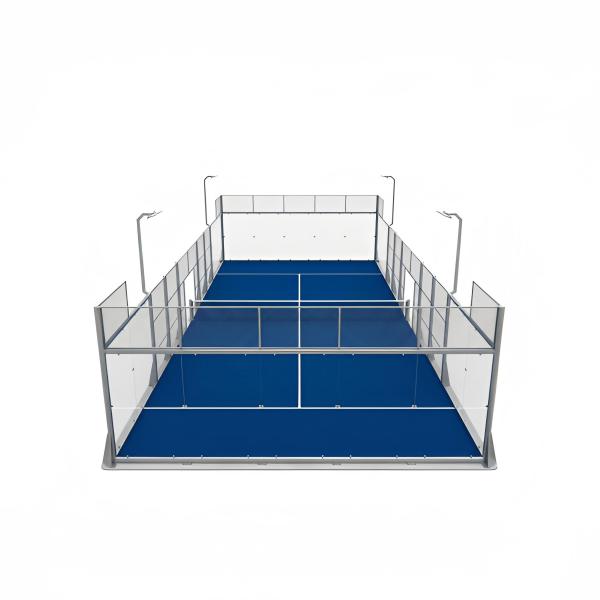
Standard Padel Court
A standard configuration may be suitable for locations where the structural design meets the local requirements and site exposure does not call for a dedicated reinforced option.
The selection should still account for outdoor wind loads, anchoring, glass support, and corrosion protection where applicable.
Wind-Resistant Padel Court
A dedicated wind-resistant configuration is worth evaluating for coastal clubs, island resorts, exposed commercial sites, and other locations with demanding wind conditions.
Rayjun's Wind Resistant Padel Court is designed around a reinforced steel structure and tempered glass system. Request the technical information needed to verify its suitability for the intended location.
Rooftop Padel Court
A rooftop project requires coordination between the court supplier, building owner, and structural engineer. The selected configuration must meet the building's load restrictions and the wind conditions at the installation height.
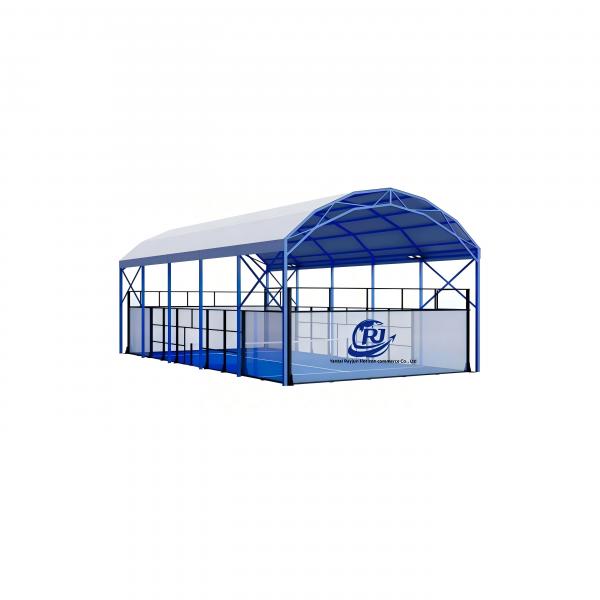
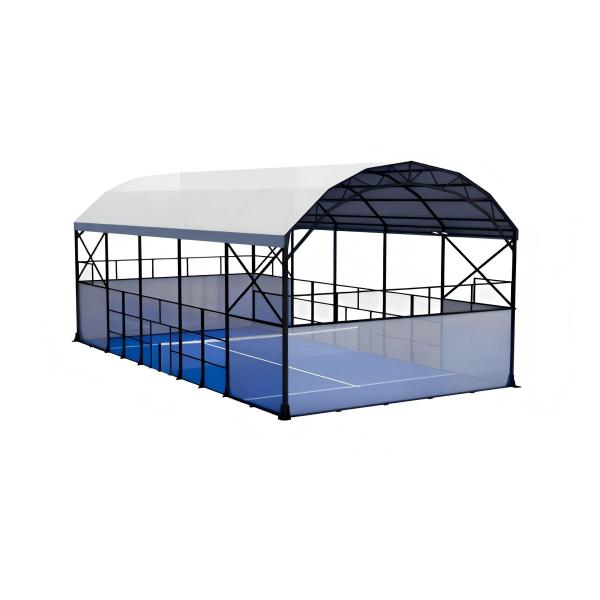
Padel Court with Canopy
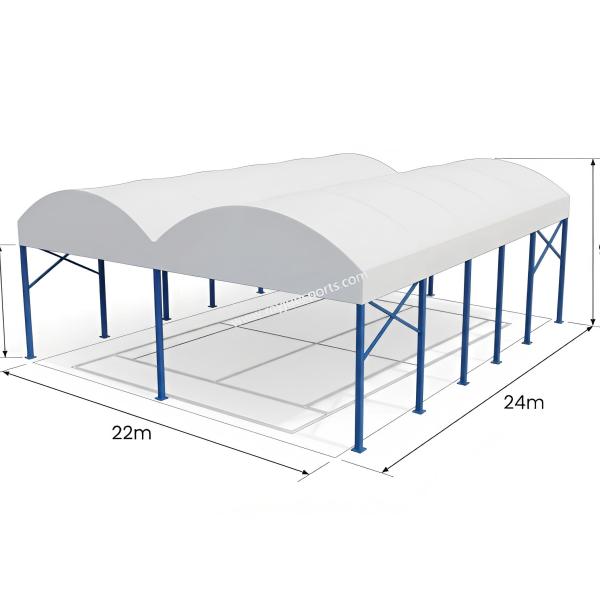
A canopy may provide shade and weather protection, but it also introduces additional surfaces and structural elements exposed to wind. The canopy and court must be assessed together, including the roof structure, connections, supports, and anchoring.
Do not assume that a canopy designed for ordinary weather conditions is suitable for a high-wind location without the necessary engineering confirmation.
8. What Should You Ask a Padel Court Supplier?
A supplier's ability to provide clear technical information is an important part of the purchasing decision.
Before placing an order, ask the following questions:
●Can you provide structural drawings?Review the main frame dimensions, connection details, base plates, and anchoring requirements.
●What wind conditions is the proposed model designed for?Confirm the design basis and whether it matches the requirements for your project location.
●How are the glass panels supported?Request information about the panel specification, fixing arrangement, and relevant structural assessment.
●What foundation is required?Confirm the supporting surface, anchoring details, and any site preparation needed before installation.
●What corrosion protection is included?Check whether the treatment is suitable for coastal exposure or other demanding environments.
●What documentation is available?Ask for applicable technical drawings, structural calculations, test reports, and installation instructions.
●What maintenance is recommended?Establish the inspection schedule and procedures for checking connections, glass fixings, mesh panels, and coating condition.
These questions help distinguish a product description from the technical evidence needed for a project-specific purchasing decision.
9. Why Consider Rayjun Sports for High-Wind Padel Court Projects?
Rayjun Sports supplies padel court systems for sports clubs, commercial facilities, hotels, resorts, and other sports infrastructure projects.
Its product range includes panoramic courts, super panoramic courts, rooftop configurations, and dedicated wind-resistant models. The appropriate option depends on the project location, structural requirements, intended use, and installation conditions.
For high-wind projects, Rayjun's wind-resistant court combines a reinforced steel structure with tempered glass panels. The published product specification identifies Q235 steel and states a wind-resistance capability of up to 154 km/h.
Before finalizing a configuration, provide the project location, local design wind requirements, installation height, site dimensions, and foundation information. These details help establish which technical documents and installation requirements need to be confirmed for the project.
Explore the Rayjun Wind Resistant Padel Court to review the product information and discuss your project requirements.
Frequently Asked Questions
What type of padel court is best for high-wind areas?
A dedicated wind-resistant padel court is worth evaluating for exposed locations. The final choice must be based on local wind conditions, structural design, glass and mesh fixing systems, anchoring, and foundation requirements.
How much wind can a Rayjun wind-resistant padel court withstand?
Rayjun's published product information states a wind-resistance capability of up to 154 km/h. Confirm the design basis, applicable installation conditions, and supporting technical documentation before using this figure as a project specification.
Is thicker steel enough to make a padel court wind-resistant?
No. Wind resistance depends on the complete structural system, including steel member dimensions, frame geometry, connections, glass supports, mesh panels, anchoring, and the foundation.
Can a wind-resistant padel court be installed near the sea?
Potentially, provided the structural design is suitable for the local wind conditions and the materials have appropriate corrosion protection. Coastal projects should specifically review salt exposure, coating specifications, fasteners, and maintenance requirements.
Can a wind-resistant padel court be installed on a rooftop?
A rooftop installation requires a site-specific structural assessment. The building must support the court's loads, and the proposed anchoring, wind resistance, waterproofing, and drainage arrangements must be approved for the project.
What information should I provide when requesting a quotation?
Provide the installation location, required court quantity, site dimensions, indoor or outdoor conditions, local wind requirements, foundation details, and target installation schedule. For rooftop projects, include available structural drawings and information about the building's load capacity.
Request a Wind-Resistant Padel Court Proposal
Planning a padel court for a coastal club, island resort, exposed sports facility, or rooftop project?
Send Rayjun Sports your project location, site dimensions, local wind requirements, and foundation information. The team can discuss suitable court configurations and the technical documentation required for your project assessment.