
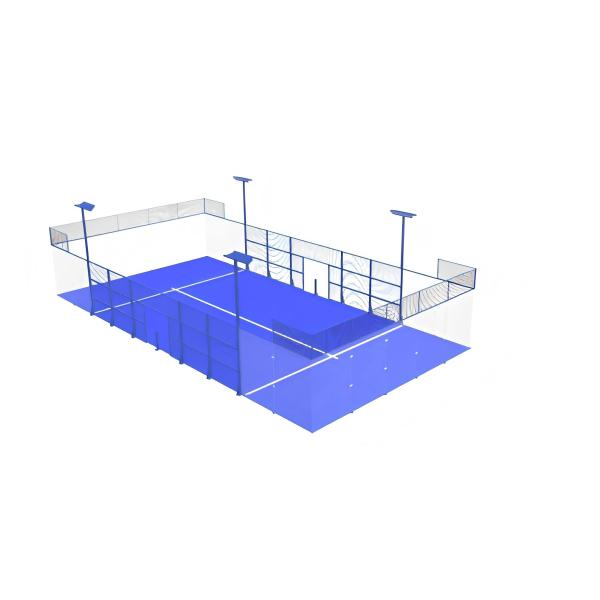
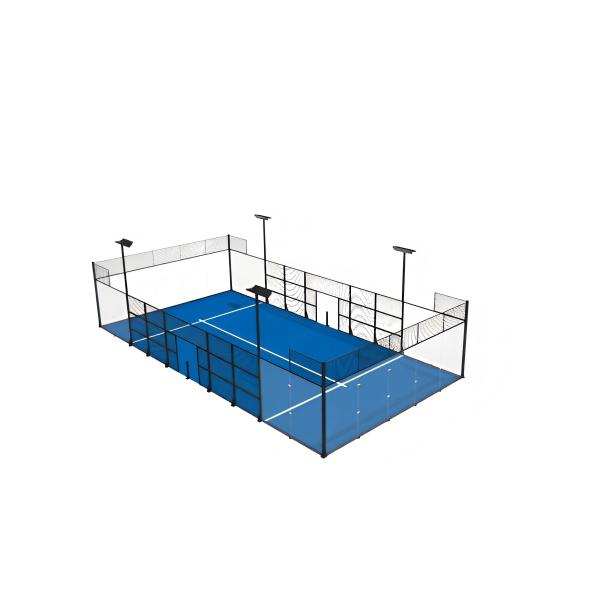
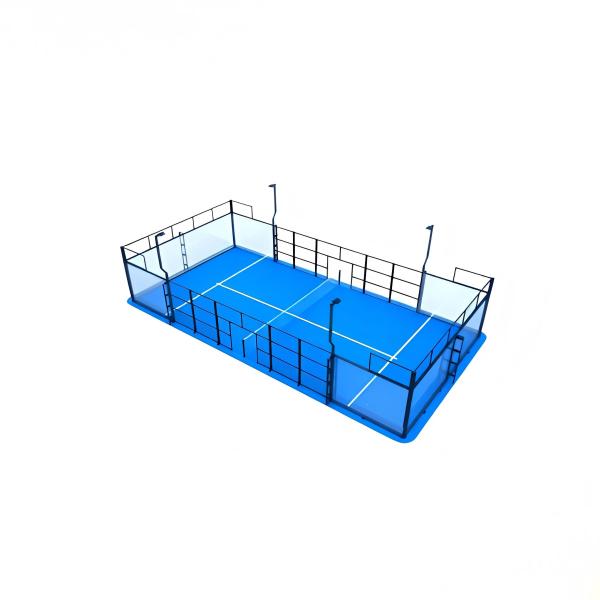
A padel court's required illuminance depends on whether it is used for recreational play, club competition, or televised professional events. As a practical starting point, buyers often compare designs around 200–300 lux for basic recreational use, 300–500 lux for regular club play, and 500–750 lux or more for higher-level competition, but these are planning ranges rather than universal compliance requirements. Before ordering a Rayjun padel court LED lighting system, confirm the applicable federation, competition, and local lighting requirements for the project.
What Does Lux Mean in Padel Court Lighting?
Lux measures illuminance: the amount of light reaching a surface per unit area. One lux equals one lumen per square metre.
A fixture's wattage does not directly establish the illuminance on a court. Two lighting systems with the same electrical power can produce different lux levels because of differences in luminous efficacy, optics, mounting height, beam angle, aiming, and light losses.
For this reason, buyers should request a lighting calculation or photometric plan rather than selecting fixtures based on wattage alone.
How Many Lux Are Needed for Different Padel Court Uses?
The following ranges can be used for early project planning, subject to the requirements applicable to the facility.
| Intended use | Preliminary average horizontal illuminance | What to confirm |
| Basic recreational play | Around 200–300 lux | Local standards and operating conditions |
| Regular club play | Around 300–500 lux | Uniformity, glare, and actual playing hours |
| Higher-level competition | Around 500–750 lux or more | Competition rules and organizer requirements |
| Televised professional play | Project-specific; potentially much higher vertical illuminance | Broadcast specifications and event regulations |
These are indicative planning ranges, not a substitute for an approved lighting design. Different organizations and jurisdictions may specify different values, and a requirement for average illuminance is not interchangeable with a minimum value or a vertical illuminance requirement.
Rayjun's existing guide to choosing quality LED lights for padel courts discusses illuminance, uniformity, glare, and fixture selection. Buyers should verify the target values against the standards applicable to their project.
What Lighting Requirements Apply to Competition Courts?
The International Padel Federation's competition rules and event-specific regulations should be checked when a court is intended for sanctioned tournaments.
For example, the FIP Beyond Rulebook published in February 2026 specifies a vertical lighting level of at least 1,000 lux for TV broadcasts, with the required value potentially increasing depending on camera-to-subject distance. This is a broadcast-related vertical illuminance requirement, not a general horizontal lux target for every padel court.
The distinction matters because horizontal illuminance is measured on the playing surface, while vertical illuminance is measured on a vertical plane, often to evaluate how well players and objects are lit for viewing or broadcasting.
Buyers should identify the competition level, governing body, broadcast requirements, and measurement method before finalizing the design.
Why Is Lighting Uniformity as Important as Lux?
A court can have a high average lux value while still containing dark corners, unevenly illuminated glass walls, or areas with distracting brightness differences.
Uniformity describes how evenly light is distributed across the measured area. A commonly used measure is:
Uniformity ratio = minimum illuminance ÷ average illuminance
For example, if the minimum measured value is 240 lux and the average is 400 lux, the ratio is 0.60.
This is an illustrative calculation, not a universal acceptance threshold. The appropriate uniformity requirement should be taken from the project's applicable lighting standard or specification.
A lighting plan should show the predicted average, minimum, and maximum illuminance, the calculation grid, and the relevant uniformity ratio. The supplier should also explain whether the calculations include the effects of the roof, glass, surrounding buildings, and other obstructions.
How Should Buyers Select Padel Court LED Lights?
The correct fixture depends on the court layout, installation height, target illuminance, environmental exposure, and control requirements.
| Selection factor | Why it matters | What to request |
| Luminous output and efficacy | Determines how much useful light is produced | Photometric data and electrical power |
| Beam distribution | Affects coverage and dark areas | IES or equivalent photometric files |
| Mounting height | Influences beam spread and glare | Lighting layout and aiming details |
| Glare control | Helps maintain visual comfort during fast play | Fixture optics and glare assessment |
| Color rendering | Affects visual clarity and color recognition | Color rendering index specification |
| Outdoor protection | Supports reliable operation in exposed conditions | Applicable ingress-protection and corrosion documentation |
| Dimming and controls | Helps match different operating periods | Control compatibility and dimming range |
Do not specify a fixture only by its wattage. A 200 W light with suitable optics may deliver a more useful distribution than a higher-powered fixture aimed incorrectly.
Rayjun lists padel court LED lighting among its product categories. Ask for the actual fixture model, photometric data, recommended mounting positions, and a project-specific lighting calculation.
Does a Covered Padel Court Need Different Lighting?
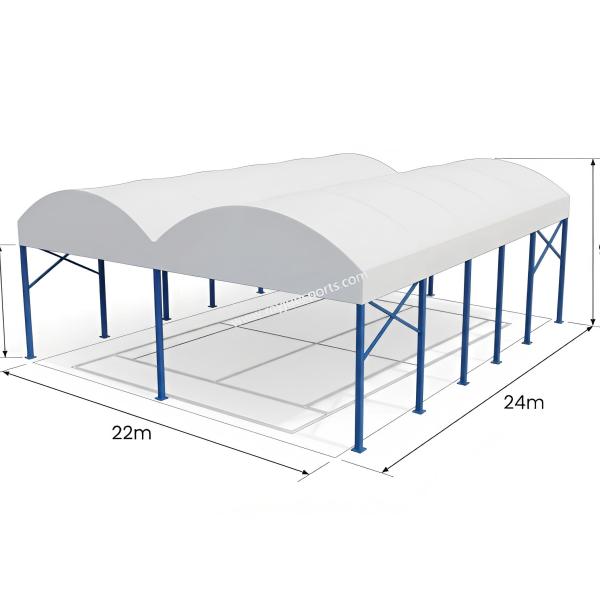
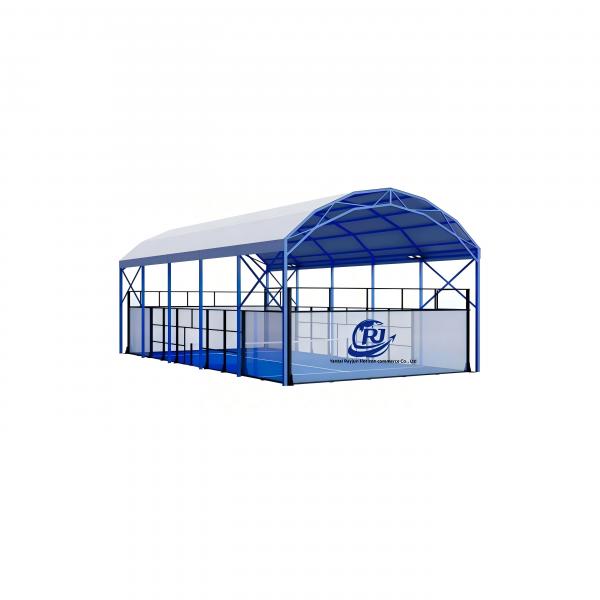
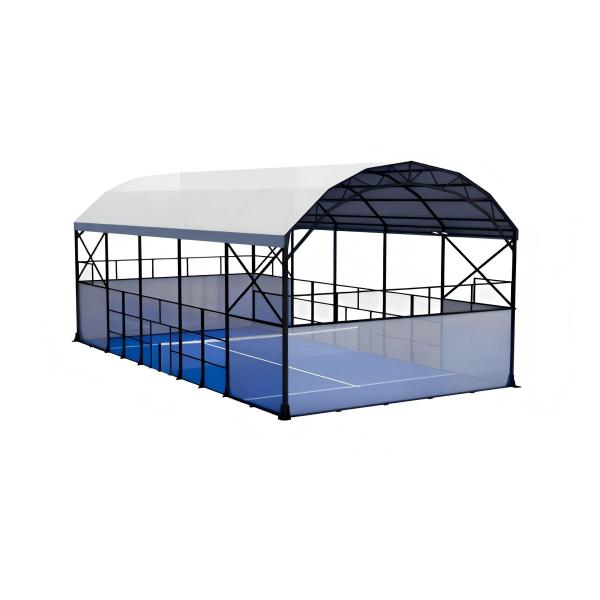
Yes, potentially. A canopy changes the mounting height, available structural positions, shadows, reflections, and the way light reaches the playing surface.
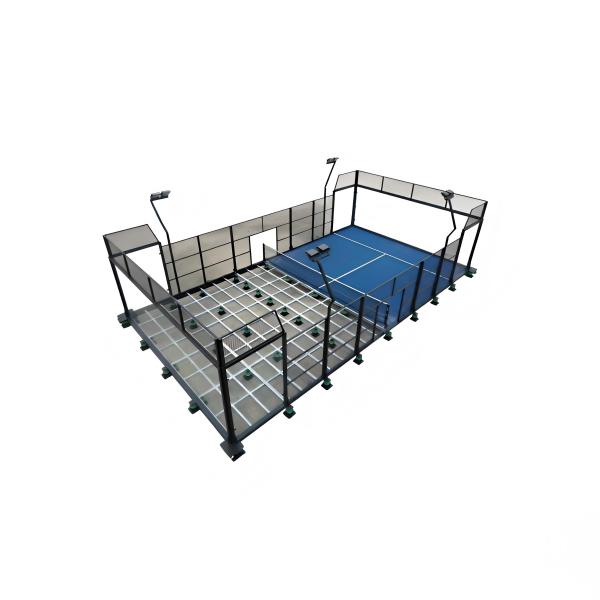
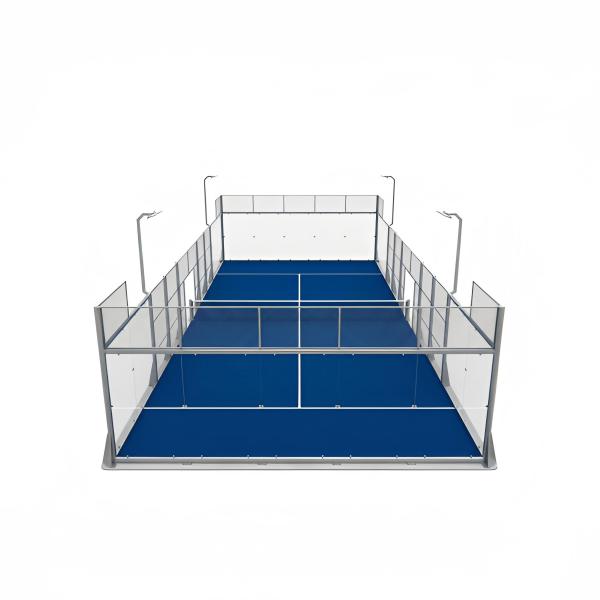
A covered court may need fixtures mounted beneath the roof structure, while an open court may use poles or other external mounting arrangements. The correct layout depends on the court dimensions, surrounding structures, and target illuminance.
Glass reflections and glare should also be considered. The lighting system should be aimed to reduce distracting reflections while maintaining sufficient visibility for players and, where applicable, spectators or cameras.
For projects that include a roof, compare the lighting design with the proposed Rayjun padel court canopy before fixing the support and electrical layouts.
How Can Buyers Verify Lux Levels After Installation?
A completed installation should be checked with a calibrated lux meter using the measurement method specified by the project.
A practical verification process includes:
-
Confirm the agreed target values and measurement grid.
-
Record the fixture model, mounting height, and aiming angles.
-
Measure illuminance at the specified points across the playing surface.
-
Calculate the average, minimum, and relevant uniformity ratios.
-
Measure vertical illuminance if required for competition or broadcasting.
-
Document the results and correct any significant deficiencies.
Measurements should be taken under defined conditions, including the state of the installed lights and any relevant contribution from daylight. If compliance is required, retain the test record and confirm that the measurement procedure meets the applicable standard.
What Are the Common Mistakes When Buying Padel Lighting?
Choosing by wattage alone: Electrical power does not tell buyers how evenly light reaches the court.
Ignoring the mounting layout: The same fixture can perform differently at different heights and angles.
Using average lux without checking minimum values: Dark areas may remain even when the average looks acceptable.
Overlooking glare: Excessive brightness or poor aiming can distract players during overhead shots.
Ignoring maintenance: Dirt, aging, failed drivers, and damaged fixtures can reduce performance over time.
Using the wrong acceptance criteria: A recreational facility and a televised competition may have substantially different requirements.
Frequently Asked Questions
Is 300 lux enough for a padel court?
It may be suitable for some recreational or club applications, but adequacy depends on the applicable standard, lighting uniformity, glare control, and operating conditions. Confirm the required average and minimum illuminance before ordering fixtures.
Does a higher-wattage LED always provide better lighting?
No. Wattage measures electrical power consumption, not the quality or distribution of light on the playing surface. Photometric data and a lighting calculation provide a more reliable basis for selection.
How is padel court lighting uniformity calculated?
A commonly used ratio divides minimum illuminance by average illuminance. The acceptance threshold depends on the project's lighting specification and should be confirmed before testing.
Does a covered court need more powerful LED fixtures?
Not automatically. The roof changes mounting positions and light distribution, so the required fixture output should be determined by a project-specific calculation. Poor positioning cannot always be corrected simply by installing more powerful lights.
What should buyers request from a padel lighting supplier?
Request fixture specifications, photometric files, a layout drawing, calculated lux values, uniformity results, glare considerations, and the relevant outdoor protection ratings. If competition or broadcasting is involved, confirm the required measurement method and acceptance criteria.
Request a Padel Court Lighting Assessment
Rayjun supplies padel court systems and LED lighting products for sports facilities and commercial projects. Contact Rayjun at andrew@rayjunhorizon.com with your court layout, indoor or outdoor conditions, mounting height, intended use, and target lux level to discuss a suitable lighting configuration.